|
You assemble an army. Join the fight to preserve Cape Cod Bay.
In 1865, Henry David Thoreau wrote of Cape Cod:
"A man may stand there and put all America behind him."
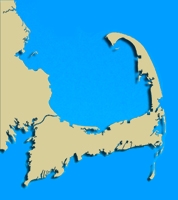
Cape Cod Bay encompasses 615 square miles of open water, and 550 miles of coast. How can we, the Provincetown Center for Coastal Studies, possibly hope to monitor an environment as extensive and diverse as Cape Cod and its Bay ecosystem? It can only be accomplished with your help.
We need watchful eyes that can detect subtle local changes. We need to develop sources of consistent, reliable, long-term environmental data. We need to build a network of energetic, engaged individuals who care about this unique ecosystem, and who will take action to help prevent its deterioration.
If you are reading this, you are part of the opening salvo, the first wave, and the initial push to establish such an ecosystem-based monitoring network for Cape Cod Bay. For the initial effort, we have selected nearshore stations around the periphery of Cape Cod Bay at which the following water quality parameters will be monitored:
- temperature
- salinity
- turbidity
- dissolved oxygen
- pH
- nutrients
The data you acquire will help yield a better understanding about baseline conditions in the Cape Cod Bay ecosystem, which in turn will allow us to collectively make more informed decisions about the future of the bay in the face of environmental, economic, social and political pressures. With this website you'll be able to witness trends and changes at your monitoring site, and hopefully learn more about the major issues and threats facing the system. Welcome to the fight, Citizen Scientist, we thank you for your involvement.
|