June 12, 2021
Yesterday the Center for Coastal Studies received word that a local lobster diver, Michael Packard, had been injured in an interaction with a humpback whale in the waters off Provincetown.
The Center’s Humpback Whale Studies Program is home to a long-term study of humpbacks off Cape Cod and the greater Gulf of Maine. Dr. Jooke Robbins directs this research, which is one of the most detailed baleen whale studies in the world.
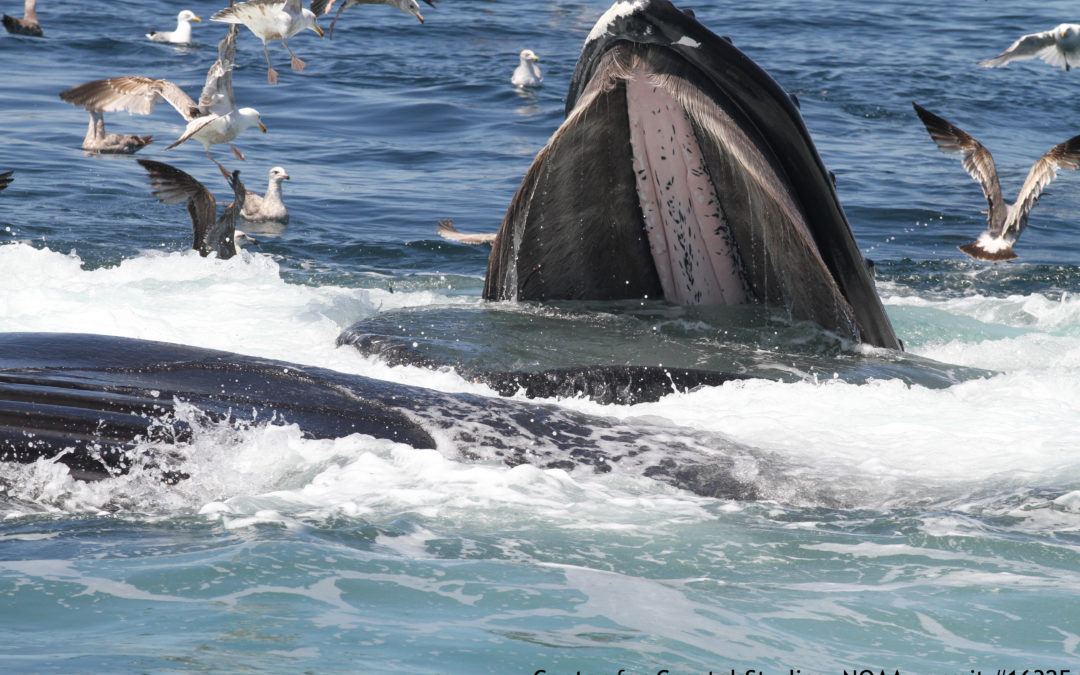
“From what we know of this event, it would have been a rare accident”, Robbins noted. Humpback whales are in this area to feed, and they spend their time seeking and engulfing small schooling fish. They lunge quickly, open their mouths wide and use baleen plates in the mouth to “filter” the water out before the fish are swallowed.
“If something lies directly in the path of a lunge feeding humpback whale, the whale might not always be able to detect it or avoid it in time,” Robbins continued. “For example, some entanglements in fishing gear begin this way and can threaten the life of the whale.”
However, interactions between humpback whales and people are rare and thought to be accidental.
“When we enter the water we become part of the whales’ habitat. It’s a great reminder to swimmers, divers and kayakers and other boaters to stay alert, and steer clear of whales whenever possible.”
Thankfully Mr. Packard suffered only minor injuries during his encounter; CCS wishes him a speedy recovery.