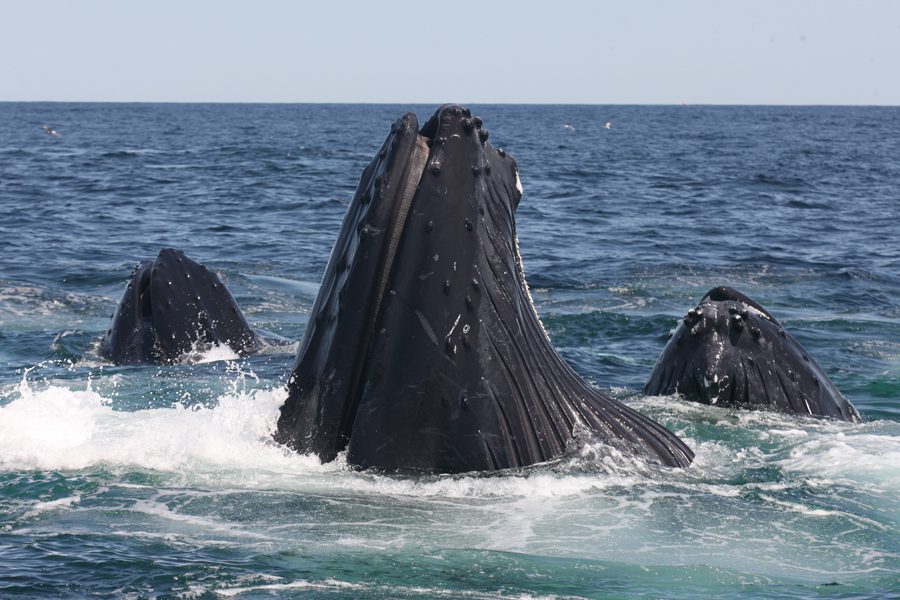
An international team of marine scientists, led by the University of Groningen in the Netherlands and the Center for Coastal Studies in the USA, has studied the DNA of family groups from four different whale species to estimate their mutation rates. The results revealed much higher mutation rates than previously thought and which are similar to those of smaller mammals such as humans, apes, and dolphins. Using the newly determined rates, the group found that the number of humpback whales in the North Atlantic before whaling was 86 percent lower than earlier genetic studies suggested. The study is the first proof that this method can be used to estimate mutation rates in wild populations and was published in the journal Science on 1 September.
Read the article in the University of Groningen Science Line News
Read the study, Wild pedigrees inform mutation rates and historic abundance in baleen whales, published Sept. 1, 2023 in Science.
Center for Coastal Studies image collected under U.S. NMFS ESA/MMPA Permit 21485.