By Fritz McGirr, Marine Debris Specialist
When I began this role in the winter of 2024 as what I have lovingly come to refer to as an Ocean Garbage Fella, I had no idea what to expect other than I was going to be picking trash off the beaches of Cape Cod and cleaning the ocean through some sort of bigger picture plan. What I didn’t know was that I was going to end up being a liaison between the worlds of science, policy, the general public, state and federal stakeholders, Indigenous tribes, commercial contractors, and the commercial fishing industry. As I ready myself to move on to new opportunities, I look back along the winding road this position has taken.
In November of 2023 I wrote a cover letter to Laura Ludwig in a bid to become her new operations assistant and stated:
“Every single time I enter the water, the human impact on our oceans is obvious, unavoidable, and staggering. Outside of typical plastic refuse, ghost traps and nets litter every submarine space in the northeast that I have seen. These remnants of our fisheries have become ubiquitous and I have wracked my brain for solutions to the issue.”
I was looking at the marine debris through the lens of a professional diver who was driven to remedy the issues of ghost gear visible on every dive that I conducted. Laura saw that interest and unique perspective and brought me on board. In this new age of AI slop mucking up our brains as well as the environment, she could tell that I had written from my own knowledge and experience, which also set me apart.
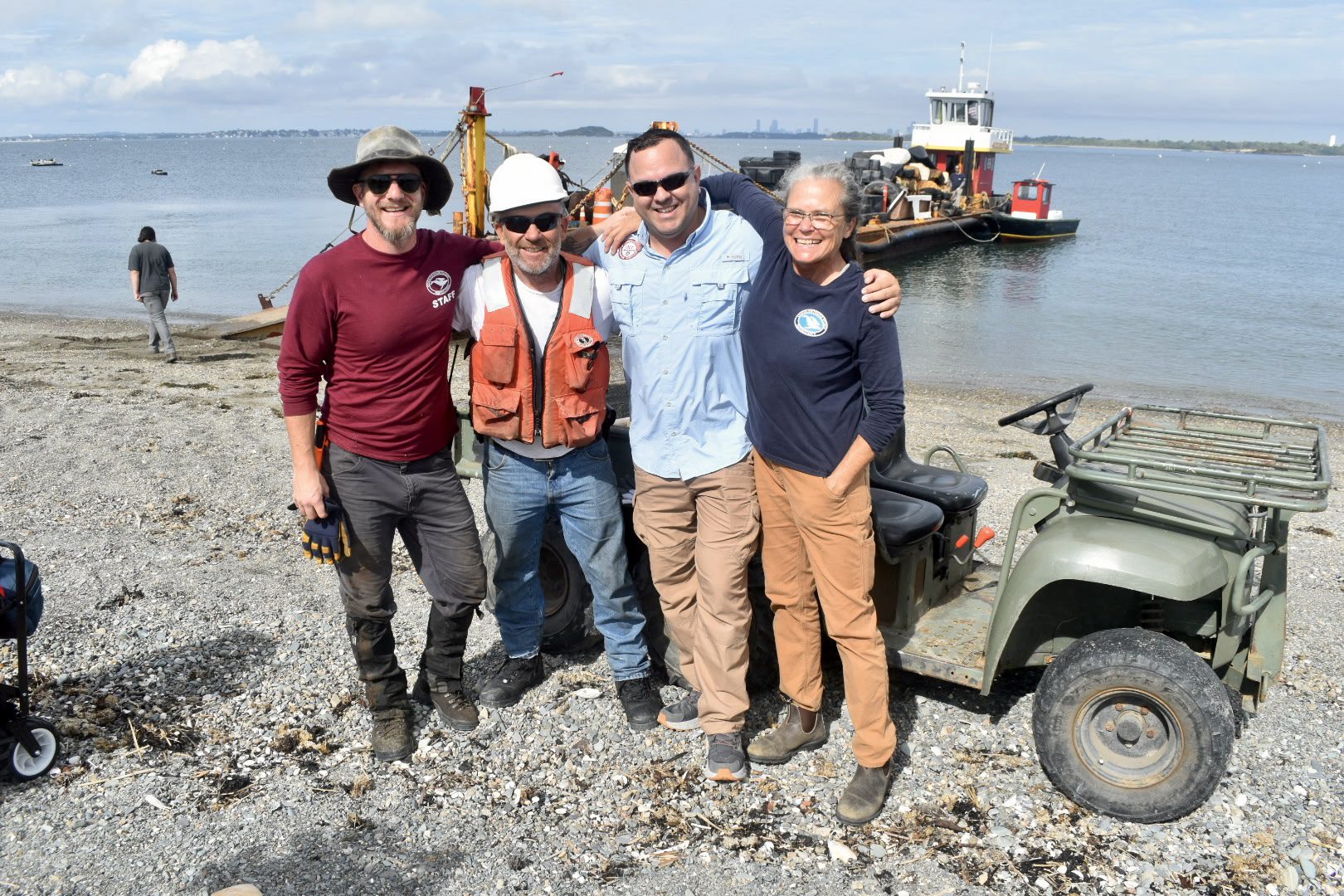 Left to right: Fritz McGirr (CCS), Mike McDevitt (Acushnet Marine), Jorge Ayub (DCR), and Laura Ludwig (CCS)
after a successful Peddocks Island cleanup with Barge Steven McDevitt in the background.
The first months of the position revolved around learning to distinguish one bit of plastic found on the beach from another while becoming acquainted with our massive Beach Brigade volunteer base. We attended a ghost gear conference and the Fishermen’s Forum in Maine as well as the Massachusetts Lobstermen’s Association (MLA) annual meeting on the Cape. I looked at datasets of gear recovered over the years and depicted the data in all of the ways my science background had taught me. We had ongoing meetings with stakeholders of the Boston Harbor Islands including the National Oceanic and Atmospheric Administration (NOAA), US Fish & Wildlife Service, National Park Service, Massachusetts Department of Conservation and Recreation, and Boston Harbor Now regarding a massive cleanup effort of the five outer islands of the harbor that was to take place in the fall. So far everything fell somewhat into the realm of what a master’s degree in marine science should prepare one for: fieldwork, data collection and analysis, stakeholder engagement, and policy review.
As we entered the spring we arrived at the field season for what would become my position’s bread and butter: sea-based ghost gear removal. Laura had a vision of expanding the current project activity out of Provincetown to include Boston and the North Shore onto Cape Ann. I am based in Boston and she left it up to me to “hit the docks” and find the fishermen we can work with for this project. No part of my scientific education included a course on “how to speak fisherman” but I went about the task with gusto anyway. Scientists are typically looked at with distrust if not outright disdain by the commercial fishing industry. After all, in some minds we are the reason there are regulations on fishing and the reason they’re struggling more and more every year.
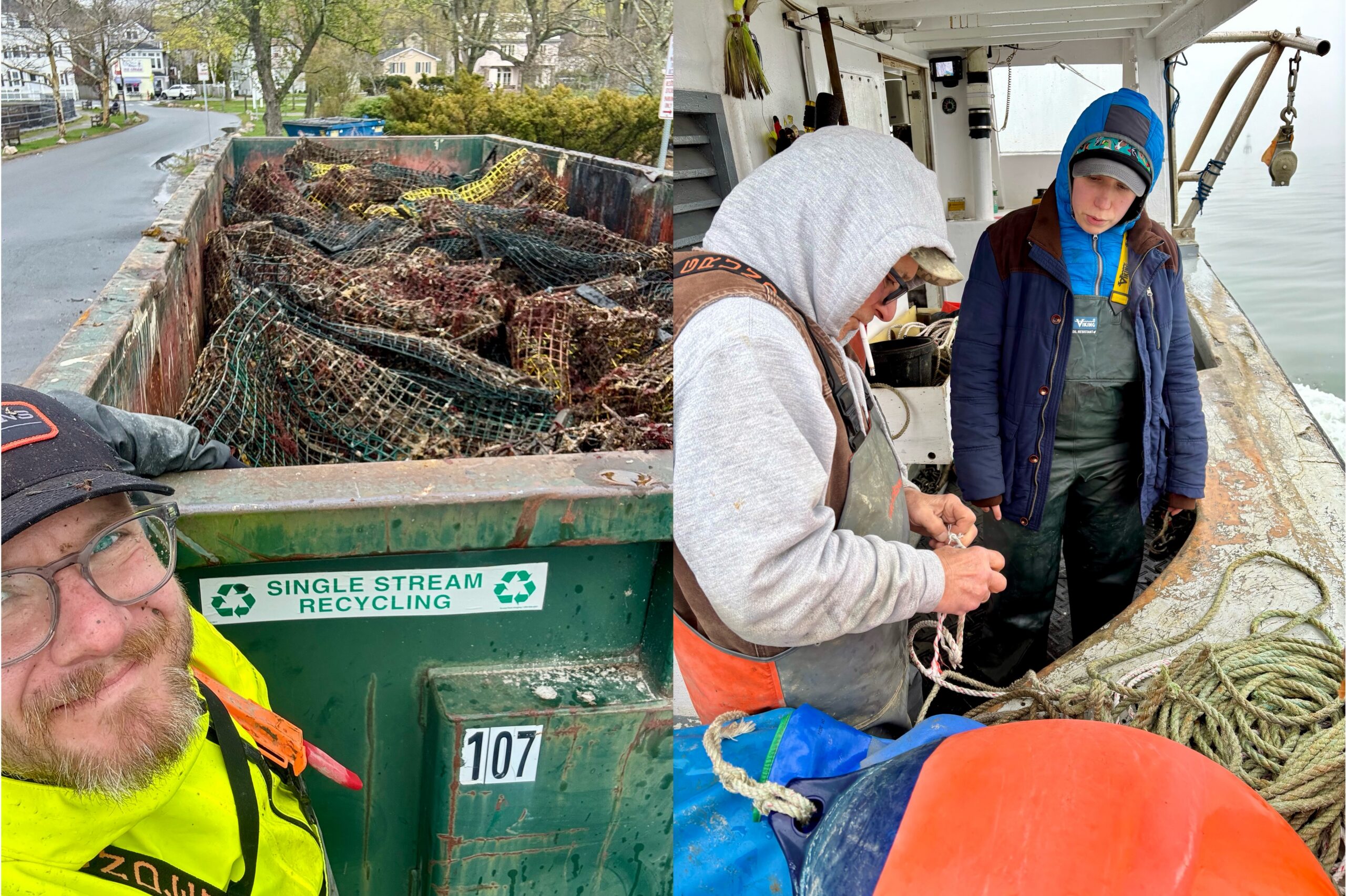 LEFT: A full 30-yd container of crushed traps ready for recycling, Manchester.
RIGHT: Dom Spinale teaches research assistant Annaleah Ernst how to splice lines on the F/V Victoria.
Jump to a beautiful spring day and I am on a run through Winthrop toward Deer Island (as part of my marathon training). I pass a large trap yard and can see a couple guys working on their traps before the season opens in May. I turn around in my short shorts, pink running shoes, and sea creature patterned hat and approach these sea-weathered, cigarette smoking fellas who look more than amused by this odd stranger coming toward them. The conversation started with “why should I care about ghost gear” and after a bit of explaining the project and that we would pay them to be on the water when they aren’t usually working ended with “all right let’s try a day and see what we find.” That one single day in 2024 yielded 28 traps recovered and we were able to return 25 of them back to the owner. The guys got to see how many lobsters, crabs, and fish were still being fished in those traps and finished the day smiling and congratulating each other on helping their fishing grounds and getting the gear back to the rightful owner. These same fishermen said “Absolutely!” when I approached them to do an entire season of work both in 2025 and this last spring in 2026.
Over the couple years that have passed since that first foray and experience with Boston fishermen, the roster has grown to include fishermen in East Boston, Beverly, and Manchester-By-The-Sea. In the past two seasons plus the single day in 2024 we have removed 499 traps from Boston Harbor and Salem Sound. The guys are happy to do the work. They’re fascinated by everything we find on the bottom and definitely get a kick out of what I do and the other research assistants I bring on board for a day on the water. I receive calls from fishermen on holidays now and am often invited to grab a beer or pizza when they’re off the water. I’ve spent days learning from their expertise – reading currents and conditions, to tying knots and trouble shooting issues on the water.
There’s a mutual trust that has built over time with the commercial fishermen and industrial contractors I have gotten to work with and I have an absolute respect for what they do every single day. They go out on the water when the rest of us would stay inside and they keep the economy of Massachusetts ticking along. They have gotten to see a little of what some scientists are doing and understand that we aren’t anti-fishing. We’re attempting to understand where best practices regarding gear can be updated while also cleaning the little bit of the ocean that we can.
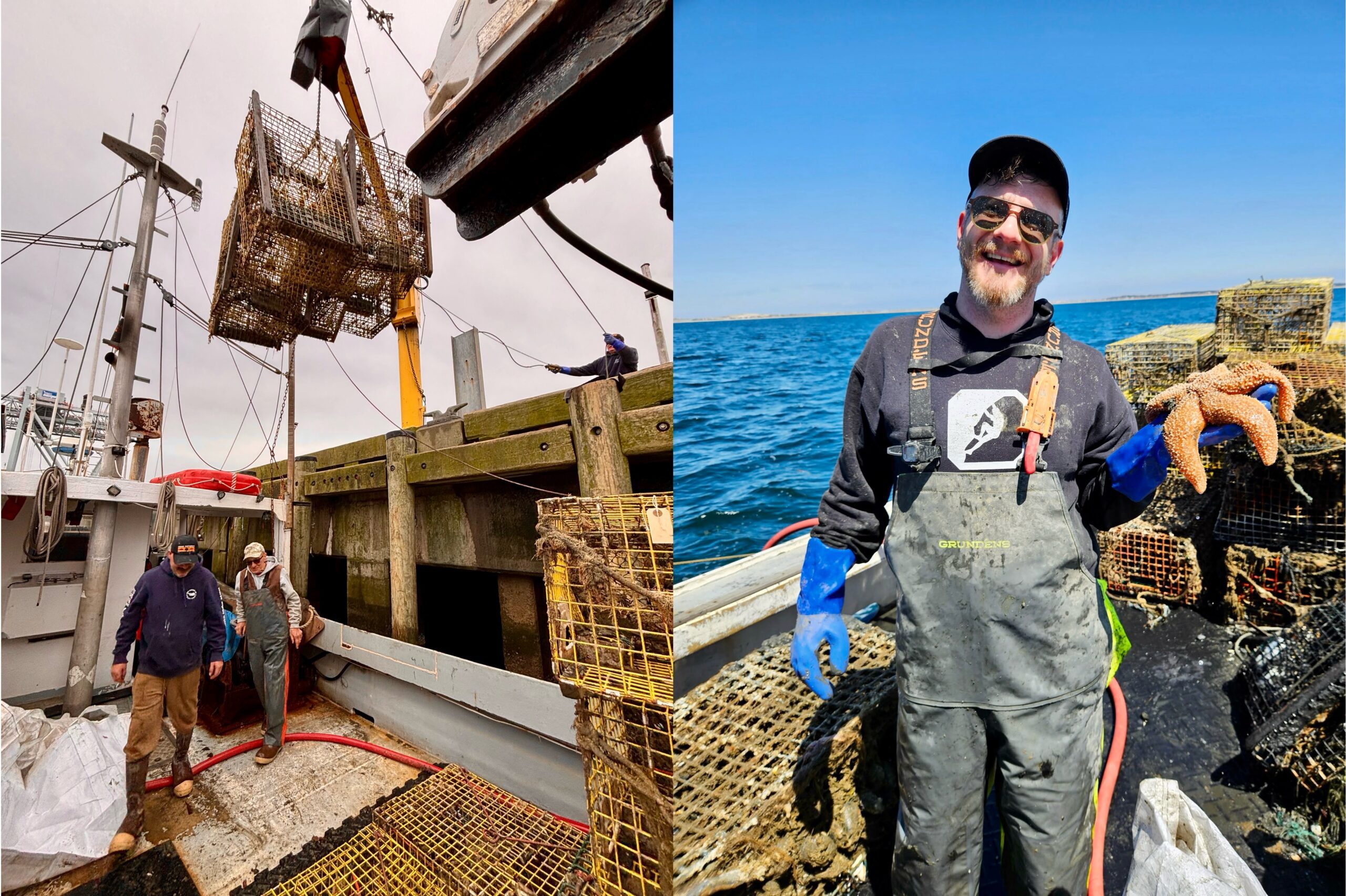 LEFT: Frank Carpenter and Dom Spinale unload reusable traps from F/V Victoria to Steve Holler on Medeiros Pier, Boston;
RIGHT: A load of traps and interesting bycatch on the F/V Miss Lilly, Provincetown.
These three years have taught me a vast amount and I’ve gotten to be a part of some really amazing projects from the ground level to the top of the operations. I’ve been deep in the nitty gritty (literally) as well as led workshops to peers with the National Parks on debris removal and data collection. I’ve collaborated with our ghost gear partners in Maine and New Hampshire to remove fishing gear from islands and shorelines there. I became known as the guy who gets stuff done. Do you need a 30-yard rolloff container delivered to an island? I know who to call. Do you need a crane, or a ship, or extra hands, or chainsaws, or a landing craft? I’ll get them there. I’ve become, if anything, multilingual in the languages needed to successfully put marine debris removal projects together. Massachusetts now formally recognizes any fishing gear that is no longer functioning as intended as debris instead of personal property, which allows anybody to clean our shorelines of debris that has washed ashore without worrying about legal ramifications. It is a direct result of our ongoing efforts that has led to this policy change and this has set the framework for other states (looking at you New Hampshire and Maine) to follow suit.
 LEFT: Mike McDevitt delivers food for volunteers on Peddocks Island from the Tug Acushnet.
RIGHT: Volunteers and a large assortment of foam waiting for barge pickup on Peddocks Island
As the NOAA grant period that allowed me to be a part of this adventure draws to a close, I’m not sure what the next steps will be; but all of you who have met me know I will not be far removed from the marine debris world. The same passion I had when I wrote that cover letter in 2023 has, if anything, gotten stronger. Maybe I’ll just buy a boat and become the Boston Harbor Ocean Garbage Fella. We’ll see.
– Fritz
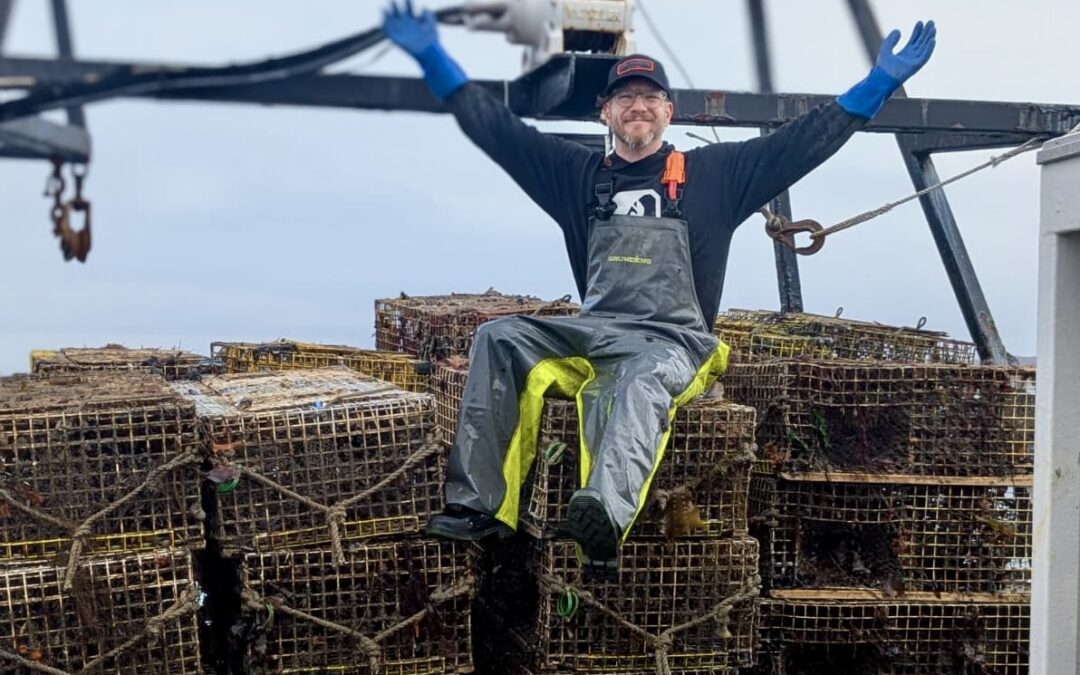
Photo at top: Fritz McGirr with a load of traps on the F/V Victoria, Boston Harbor.