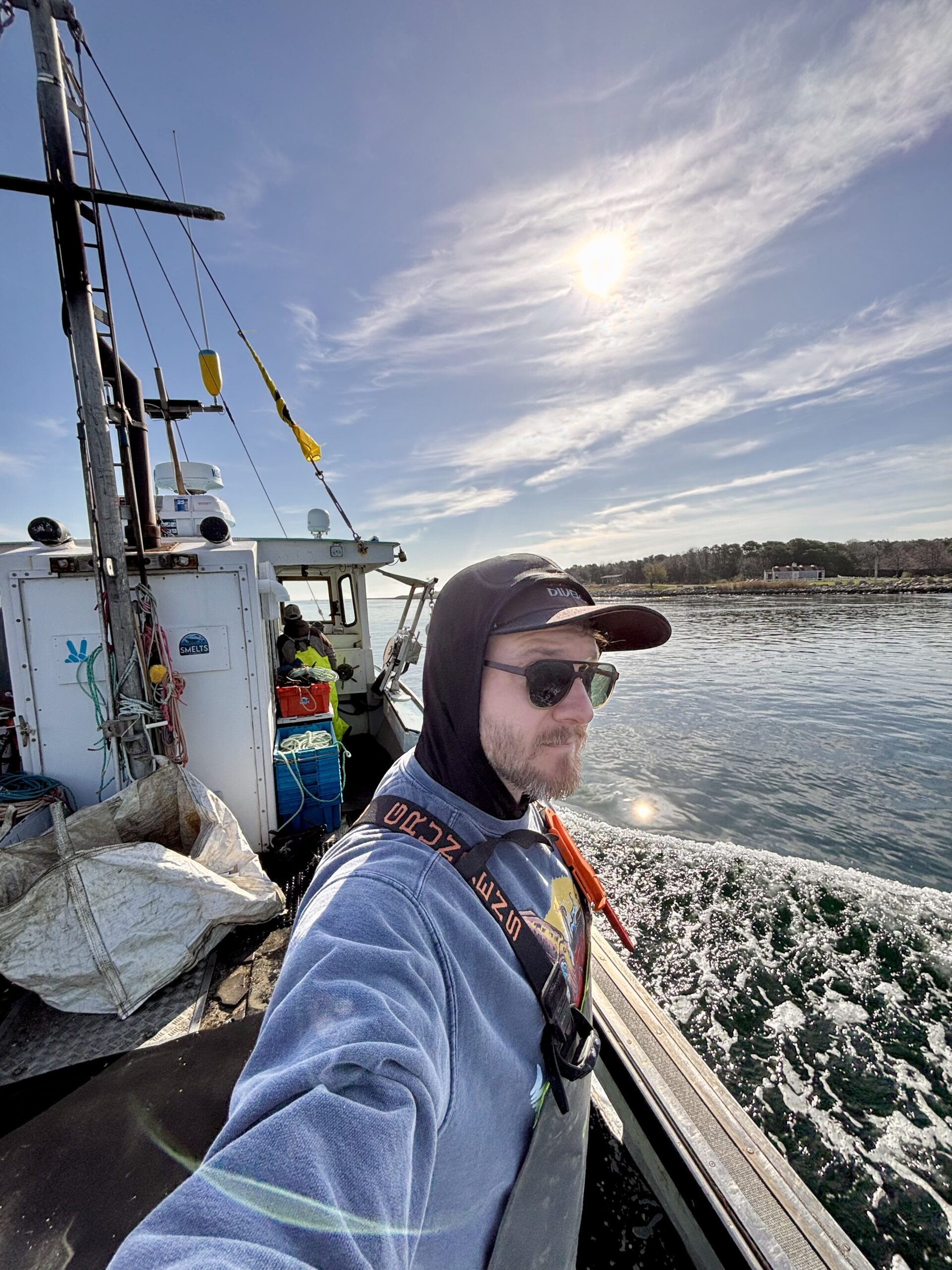

A blog post by Fritz McGirr, Marine Debris Operations Assistant
Each spring, the critically endangered North Atlantic right whales enter Cape Cod Bay to feed before their journey further north for the summer. At this time from February 1st to mid-May, the Massachusetts Division of Marine Fisheries closes the season for commercial lobster fishing within its waters. The vertical buoy lines used in fixed-gear fishing pose an entanglement risk to whales, so removing all fixed-gear from the water ensures that the whales will encounter as few hazards as possible while they feed and migrate. The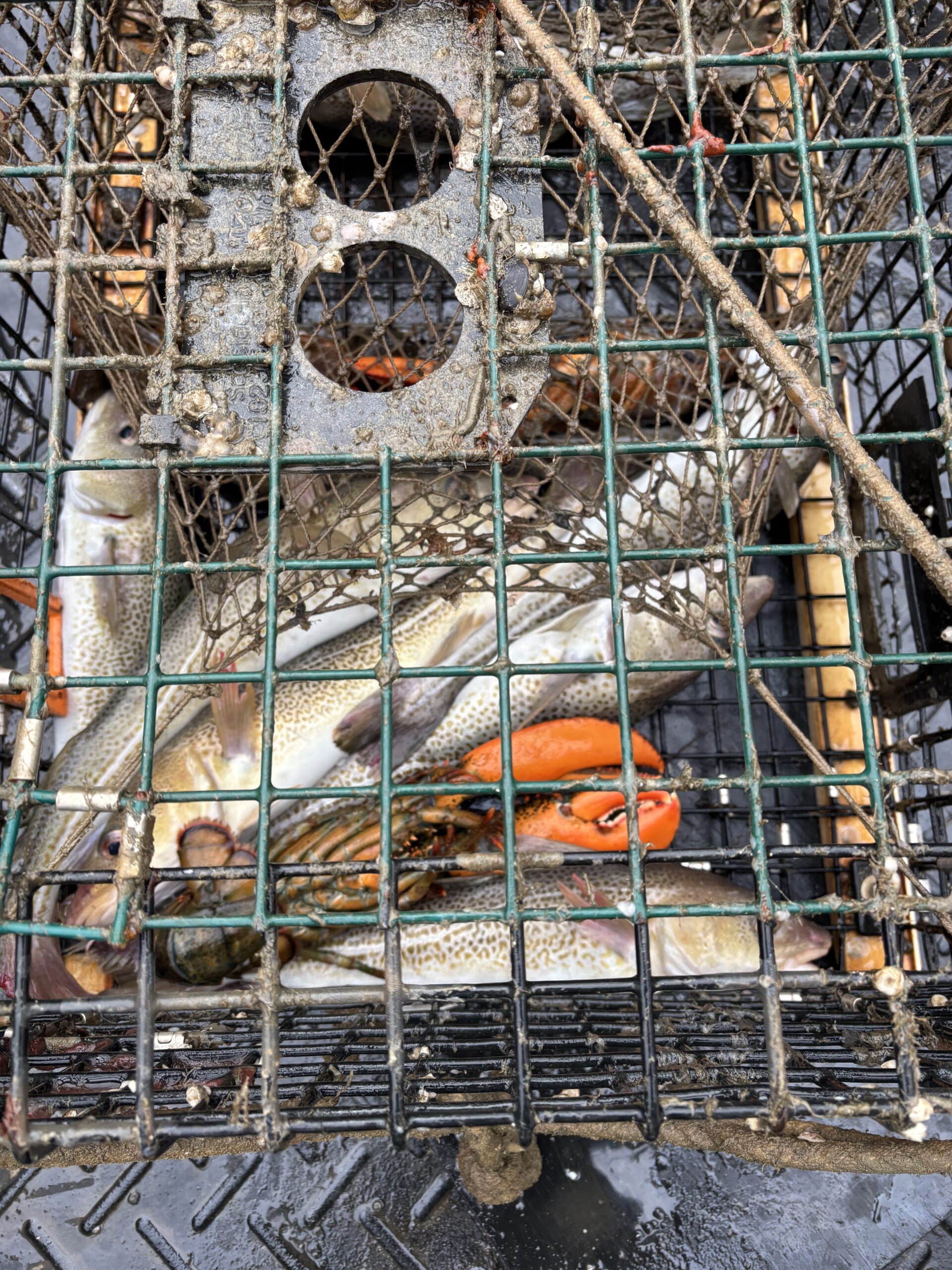 marine debris team at the Center for Coastal Studies is permitted during this closure to work with fishermen to remove as much abandoned, lost, or discarded fishing gear (ALDFG) as we can. This is fishing gear that is no longer buoyed, and has been lost due to a multitude of factors: from storms, conflict with other fisheries, or cut off by the propellers of cruise ships, freighters, or pleasure boats, among other causes.
Much of the ALDFG is from the lobster fishery, a very important industry in New England. Modern wire lobster traps are made to withstand time in the water, increasing the number of seasons they can be used with minimal repairs. They are both structurally sturdy, and coated in polyvinyl chloride (PVC) to protect against oxidation from salt water exposure . While these are positive attributes for the fishermen, their durability can pose a problem once the gear has been lost as they continue to fish long after their disappearance. By law, traps must be fitted with a breakaway or bio-vent that corrodes to open after a year or so, allowing animals to escape. However, our data show that many of the vents become biofouled by algae or tunicates or are installed improperly, leading to the catching of organisms including lobsters, crabs, and even fish year after year. This bycatch leads to a waste and loss in fishery stocks.
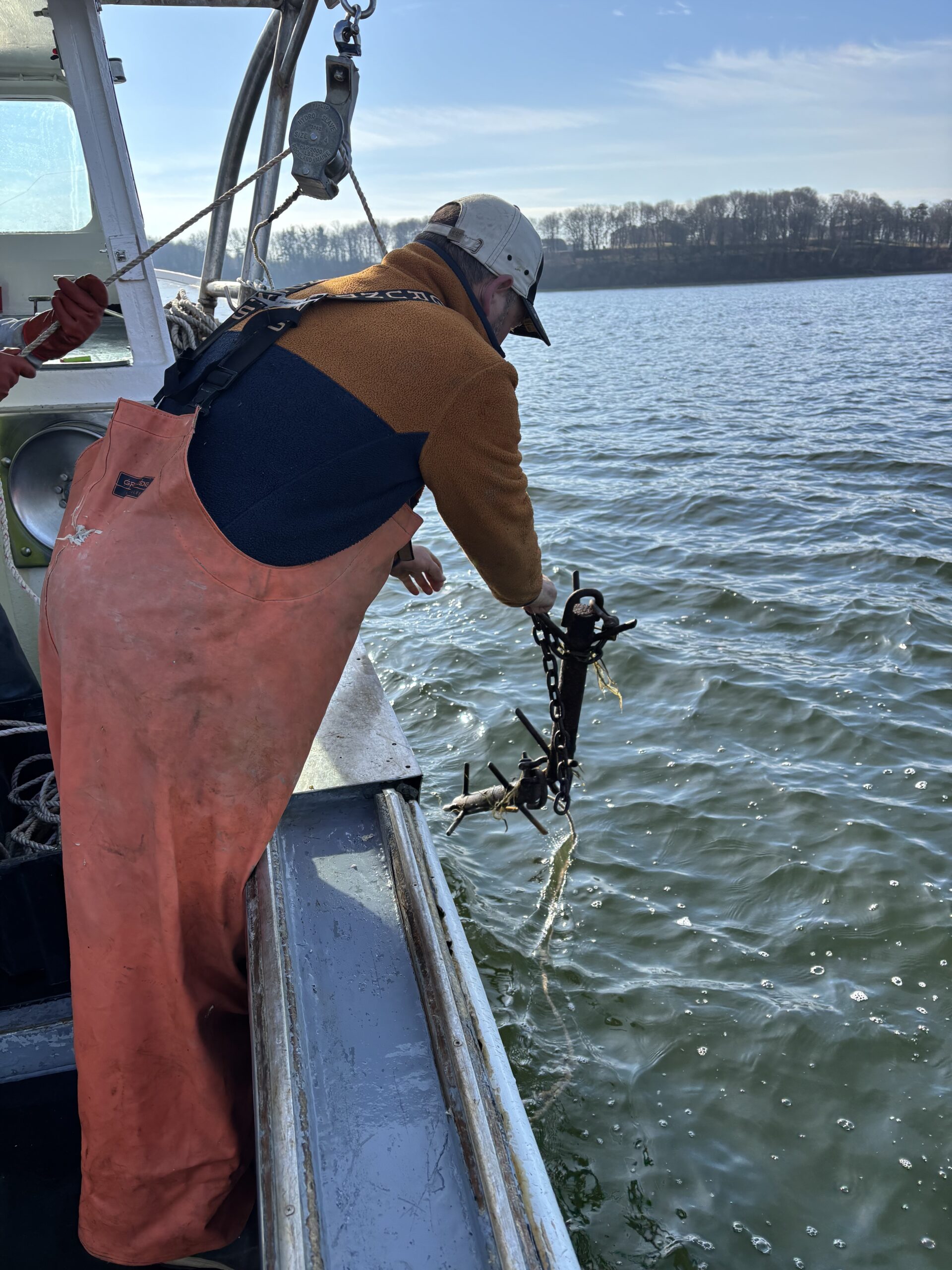
Over 24 days on the water this recent spring, we set out from five separate ports throughout Massachusetts (Provincetown, Sandwich, Winthrop, East Boston, and Beverly), hired six separate vessels, and employed nine fishermen to find known hotspots of gear or follow our sidescan sonar data and retrieve as much ALDFG as we could. Each vessel was equipped with a grapple to drag over the area of ex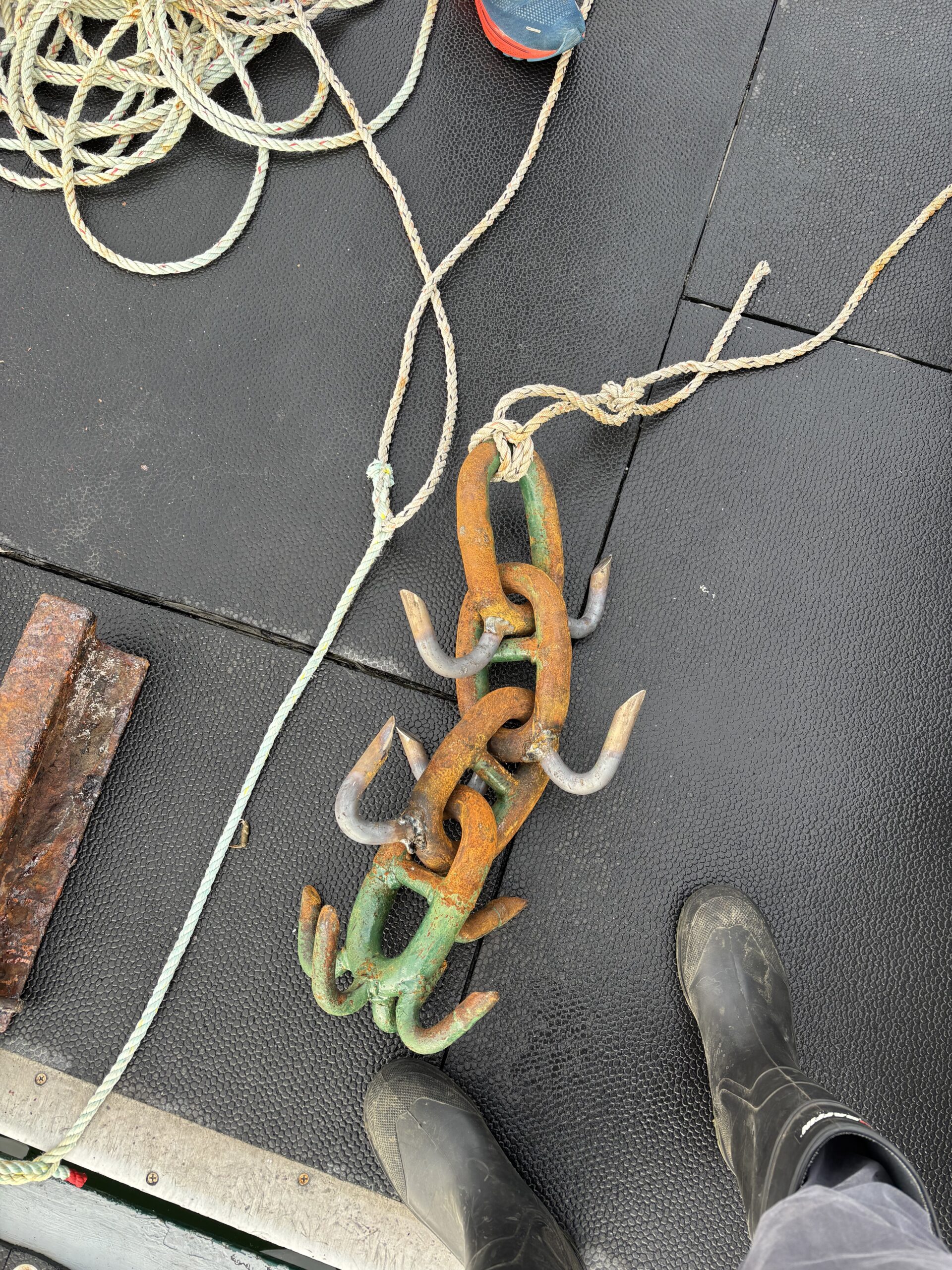 pected gear to catch either the traps themselves, the groundline that links multiple traps together in a trawl, or a tangled ball of gear. Debris was brought onboard the vessel and then meticulously documented to be added to our robust data set. The variables that we track include: the condition of each trap and whether it is crushed or not, status of the escape vent, documenting why the vent was closed if it hadn’t opened up, photo documentation of the whole trap, any creatures caught inside the trap, including species, sex, and in the case of lobsters, size with reference to MA lobster size
  restrictions, and finally all information off of the most recent ID tag on the trap, including ID number, Year, State, and Trap Number. The details of the ID tag allow us to track the traps back to their owner as well as give us the information of how long that specific trap had been lost. If the traps are still fishable, we work to contact the owner and see if they would like their traps back, which we hold for them until they are able to be picked up. Other traps that are no longer fishable or whose owners can’t retrieve them are stripped of their ballast bricks and sent to scrap recycling.
This year we retrieved 520 lost traps from Massachusetts waters, returning 120 of them to their owners. Nearly 10,000 pounds of commercial lobster line was removed from the water and 550 bricks have been donated and repurposed for other use. The ID tags represented 82 separate fishermen spanning 25 years between 1999 and 2024 with 169 of the traps being unidentifiable. (2008 was the only year in that span that wasn’t represented this season.)
This season we expanded the scope of our project outside of Cape Cod Bay, working in Boston waters and north off Cape Ann. Our hopes are to keep expanding to the New Hampshire border and work on grappling projects with partners in New Hampshire waters. Throughout this project we meet and work with stakeholders in the fishing industry and build relationships with the municipalities that support the landing of fishing gear onto their piers, taking up space in their parking lots and assisting with loading tons of debris into the disposal bins. Without the support of the fishing industry and the port towns they fish out of, none of these cleanup efforts would be possible. It is only with this mutual support that we can really make a dent in the amount of lost gear that is on the ocean bottom.
Thanks as always for reading,
Fritz