A new exhibition at Provincetown Art Association and Museum (PAAM) celebrates the 50th anniversary of the Center for Coastal Studies (CCS). “Persistent Curiosity: Charting the Rippled Fabric of the Sea,” opens May 15 and runs through July 19. An opening reception is scheduled for May 22 at 6 pm.
Curated by PAAM CEO Christine McCarthy and CCS Scientist/Artist-in-Residence Mark Adams, the exhibition draws on contemporary artists with a long connection to Provincetown’s marine history as well on works from PAAM’s permanent collection, including many donated by the late Napi and Helen Van Dereck.
According to the curators, works were selected because they resonate with the show’s themes of whale biology, marine ecology, coastal landforms and working life by the sea.
Adams writes: “the artists on view in this exhibition have created visual metaphors for sand, tides and currents, the lives of whales and plankton, and the seaworthiness of our harbor towns, evoking a rich maritime half-century and a changing ethos about how to live by the ocean.”
Given Provincetown’s rich history and culture shaped by the sea and the coastal environment, the collaboration between PAAM and the Center for Coastal Studies makes sense. Moreover, observed Adams, “the eye of the artist mirrors the eye of the scientist, posing questions and gathering experience.”
Artists in the exhibition include Ross Moffett, Bert Yarborough, Charles Kaeselau, Sarah Landry, Jack Kearney, and Bruce McKain.
“Not all artists are naturalists, but many celebrate what nature does. Each depiction of a whale or a continent is a lens directing our gaze. One job of the artist is to point and see – as in the poignant watercolors of beached whales by Joel Janowitz and the passionate doryman of Paul Stopforth,” said Adams.
McCarthy writes: “Both the Provincetown Art Association and Museum and the Center for Coastal Studies are rooted in a shared love for the Outer Cape. Celebrating their 50th anniversary through this exhibition is a meaningful way to honor that legacy and bring our community together through art, science, and a commitment to protecting our coastal environment.”
“PAAM and CCS are Provincetown institutions with much in common. We tell the story of the Outer Cape through both art and science. An exhibition like this reminds us of the critical relationship between scientists and artists. Artists are inspired by the natural world we study, and in turn, they communicate its value through their creative offerings,” said CCS Executive Director Anne-Marie Runfola.
About the Provincetown Art Association and Museum
Provincetown Art Association and Museum (PAAM) was established in 1914 by a group of artists and townspeople to build a permanent collection of works by artists of outer Cape Cod, and to exhibit art that would allow for unification within the community. Through a comprehensive schedule of exhibitions of local and national significance and educational outreach, PAAM provides the public access to art, artists, and the creative process.
Integral to the community comprising the Provincetown Art Colony, PAAM embodies the qualities that make Provincetown an enduring American center for the arts, and serves as Cape Cod’s most widely-attended art museum.
As interest in the region’s contribution to American art history continues to grow, PAAM presents an ever-changing lineup of exhibitions, lectures, workshops and cultural events that seek to promote and cultivate appreciation for all branches of the fine arts for which Provincetown is known.
About the Center for Coastal Studies
Located in Provincetown, MA, the Center for Coastal Studies is an independent research organization dedicated to advancing marine science and deepening understanding of ocean ecosystems through scientific research and education. For 50 years, CCS has conducted field-based science that expands knowledge and informs responsible stewardship of the ocean.

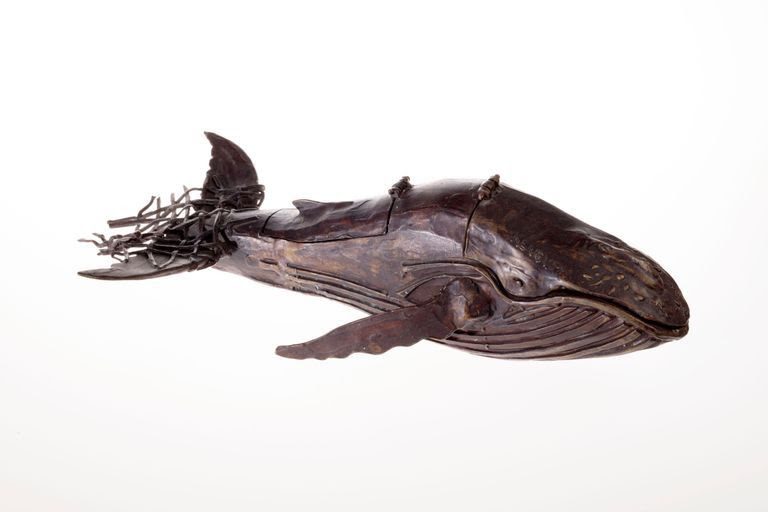
Image at top: John (Jack) Kearney (1924 – 2014), Whale Entangled, bronze, PAAM Collection, Gift of the Murphy-Godinez Collection, in memory of Glenn Stuart Berman, 2020
Bottom: Barbara Schuler Mayo, Lobster anatomy study