Founded in 1976 and located in Provincetown, the Center for Coastal Studies (CCS) is a non-profit organization dedicated to understanding, preserving and protecting Cape Cod’s marine ecosystems. Research ranges from right whales, sharks and seals to eel grass, fisheries, and water quality; from coastal geology to marine debris and plastics, and more. The Center also operates the Marine Animal Entanglement Response program, which responds to entangled whales and turtles.

How many species of whales are there today?
There are 94 different species of Cetaceans (whales, dolphins and porpoises) worldwide. There are 79 species of toothed whales (Odontocetes) and 15 species of baleen whales (Mysticetes).

How large are whales?
Cetaceans range in size from the largest animal on Earth, the blue whale 98 feet and 199 tonnes, to the vaquita 4.9 feet and 120 lbs. Most species are less than 20ft long and weigh less than 3000lbs.

What species of whales are found off Cape Cod?
Humpback, minke, fin, sei and North Atlantic right whales are our common baleen species, while common dolphins, Atlantic white-sided dolphins, and harbor porpoises are our common toothed species.

How many North Atlantic right whales are left in the world?
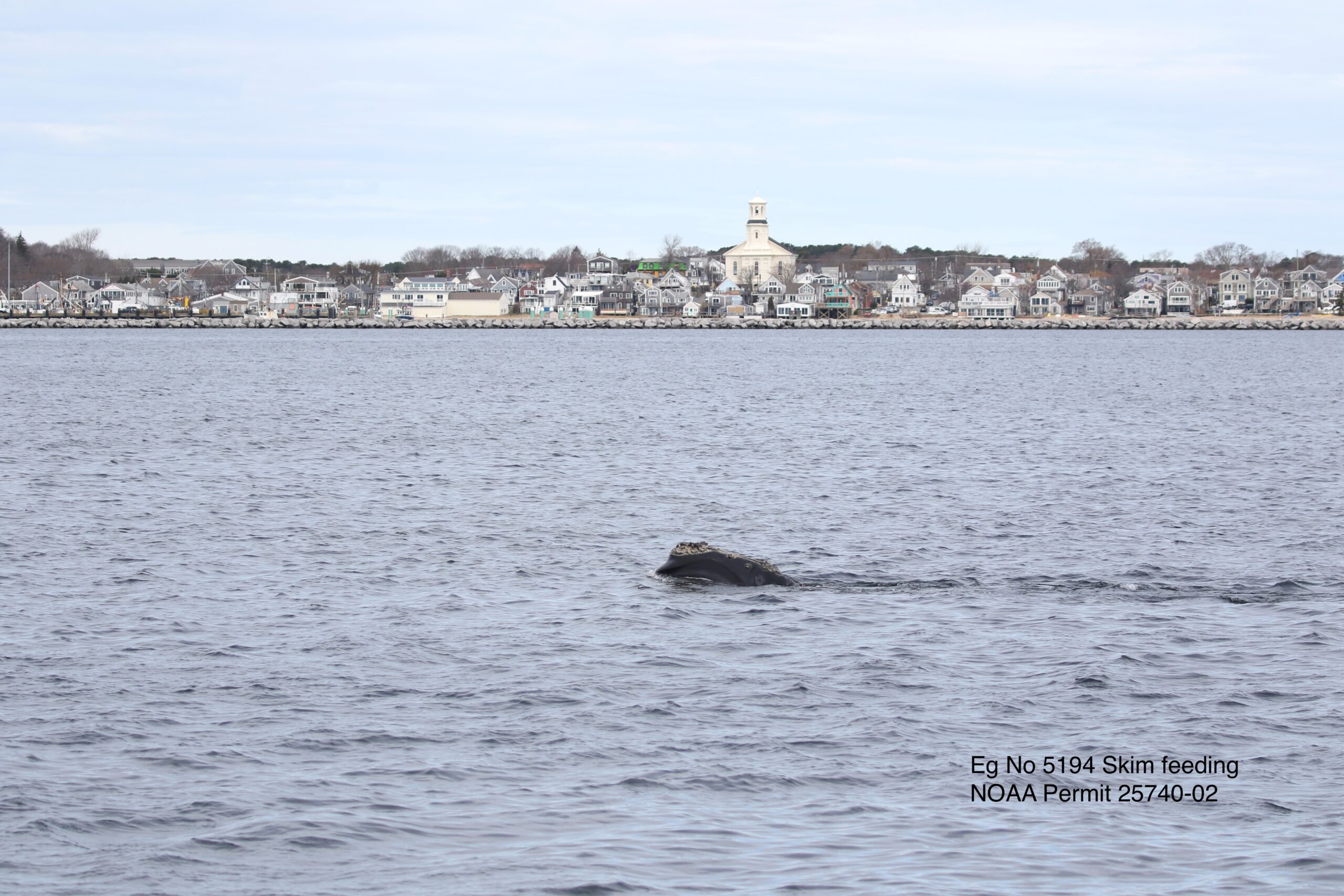
There are only an estimated 356 NARWs left in the world. Every winter and spring between 60-75% of the entire world’s population visit the rich feeding grounds in Cape Cod Bay.
What do whales (Cetaceans) eat?
Most Cetaceans eat small fish and squid. A few species of baleen whales feed on krill and small fish, while a few others like NARW eat very small zooplankton called copepods.

What are major threats to whales?
Entanglement in ropes and nets, ship strikes, noise pollution (from shipping and oil and gas exploration), plastic pollution, whaling, and climate change.