Marine ecologist Bryan Legare’s expertise in studying shark behavior in near-coastal environments has moved beyond the boundaries of Cape Cod. On May 24th, Legare, who is Manager of the Center for Coastal Studies’ Shark Ecology Research Program, brought his work to the British Virgin Islands. The goal of his research is to gain a better understanding of the status of the shark community, particularly that of lemon sharks, nurse sharks, tiger sharks, and protect the critical habitats that support them.
The two-week expedition is primarily focused around the islands of Anegada, British Virgin Islands. Working with local partner Beyond the Reef, Legare is focused on documenting more about sharks’ specific habitat use and residency time, and identifying areas important to local shark populations. Such knowledge can be used to inform conservation efforts.
Research on Anegada Island, a remote and sparsely populated island northeast of Virgin Gorda, is focused on an important breeding ground for nurse sharks. Legare and his team plan to tag nurse sharks with acoustic transmitters similar to those used on white sharks on Cape Cod in order to track their movements over time.
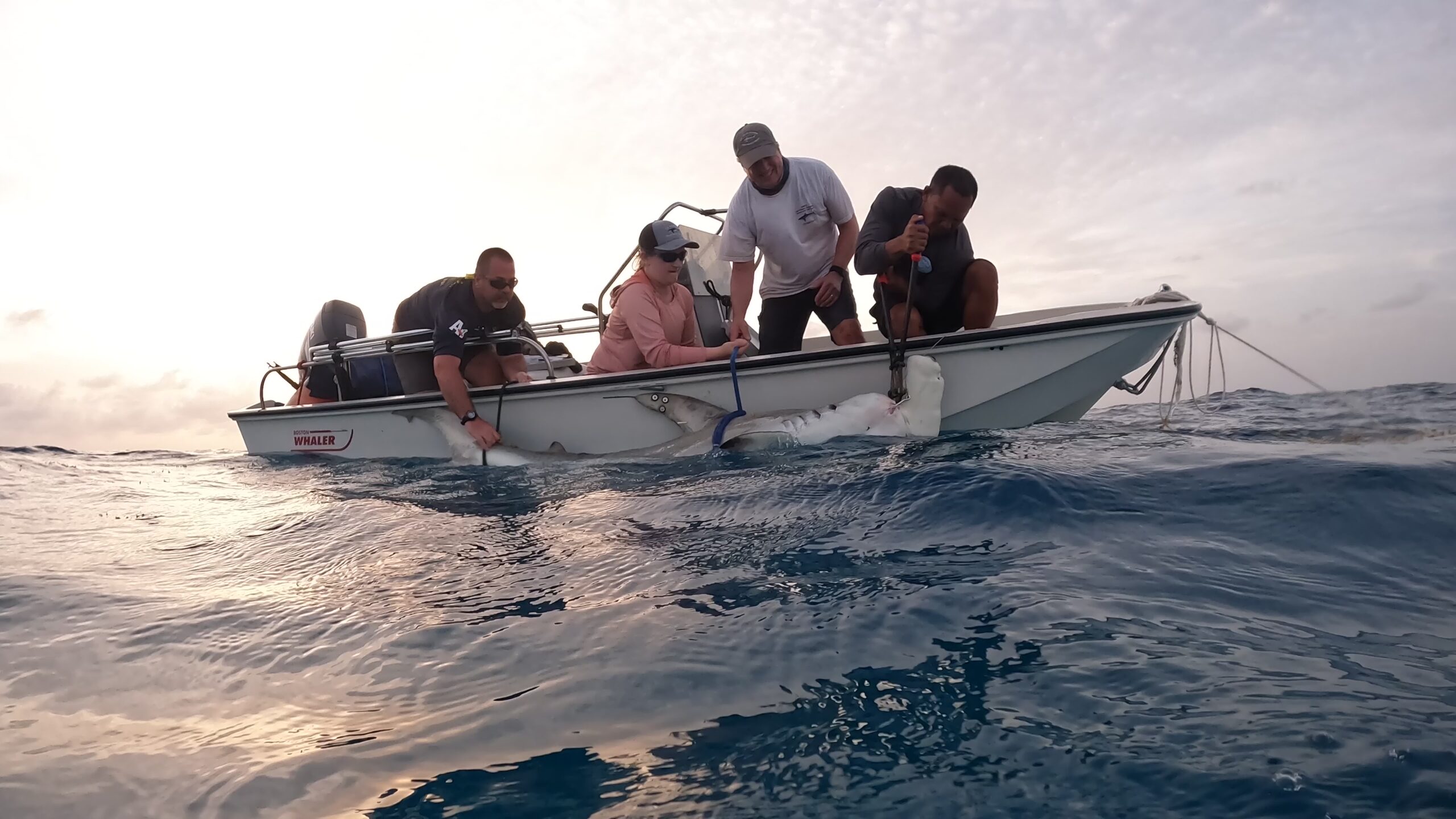 Sunset tagging of a 9 ft. male great hammerhead shark
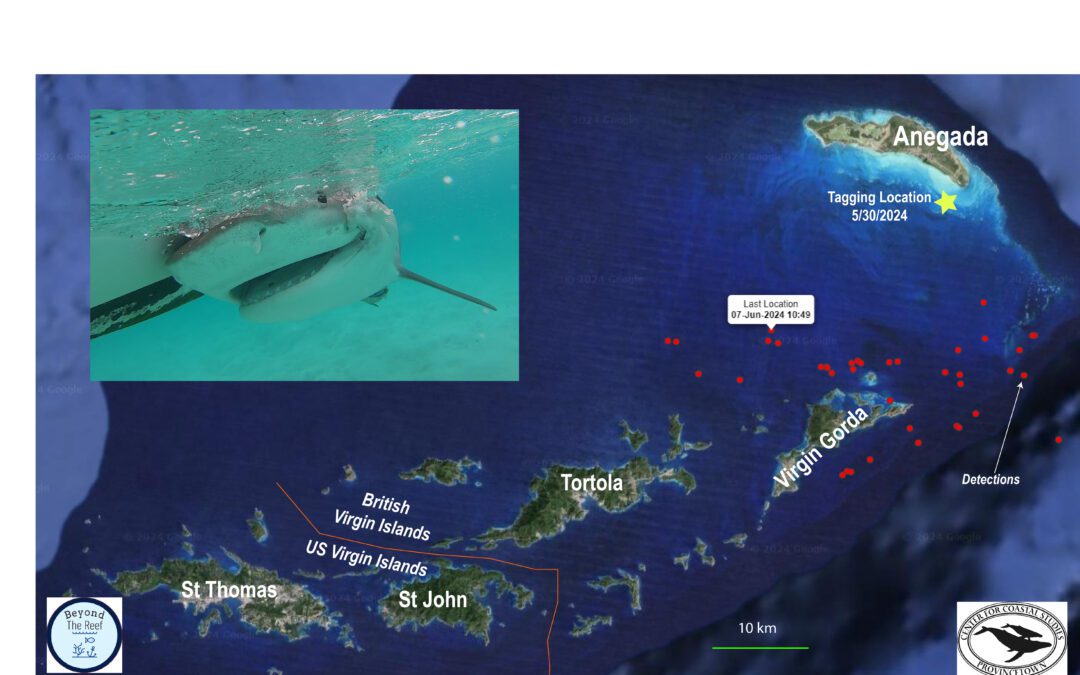
Using satellite technology, the team is also tagging tiger sharks to chart their movements and to begin collecting metrics on how they behave. A live map on the Center for Coastal Studies’ and Beyond the Reef websites charting the sharks’ movements is planned.
In addition, Legare’s research continues in lemon shark nursery areas around Hans Creeks off Beef Island and the mangrove lagoon on Anegada, both important shallow-water nurseries for lemon sharks, who find protection among the seagrass and mangrove roots. Legare hopes to learn more about lemon shark behavior, and identify specific areas that are both important for lemon sharks and in need of protection.
“We really don’t know anything about the status of these sharks, but I do know that their habitats are in trouble,” said Legare. Threats the fragile habitats face include development, climate change, and sedimentation, which is run-off caused by increasingly strong storms. In addition, the habitat is threatened by the arrival of massive blooms of floating sargassum.
Gathering data on these sharks will allow managers to better understand the importance of near-shore ecosystems and make more informed decisions regarding conservation.
“Information to date is anecdotal but we need proper scientific documentation for long term sustainability, understanding the specific locations and timing are important,” explained Legare.
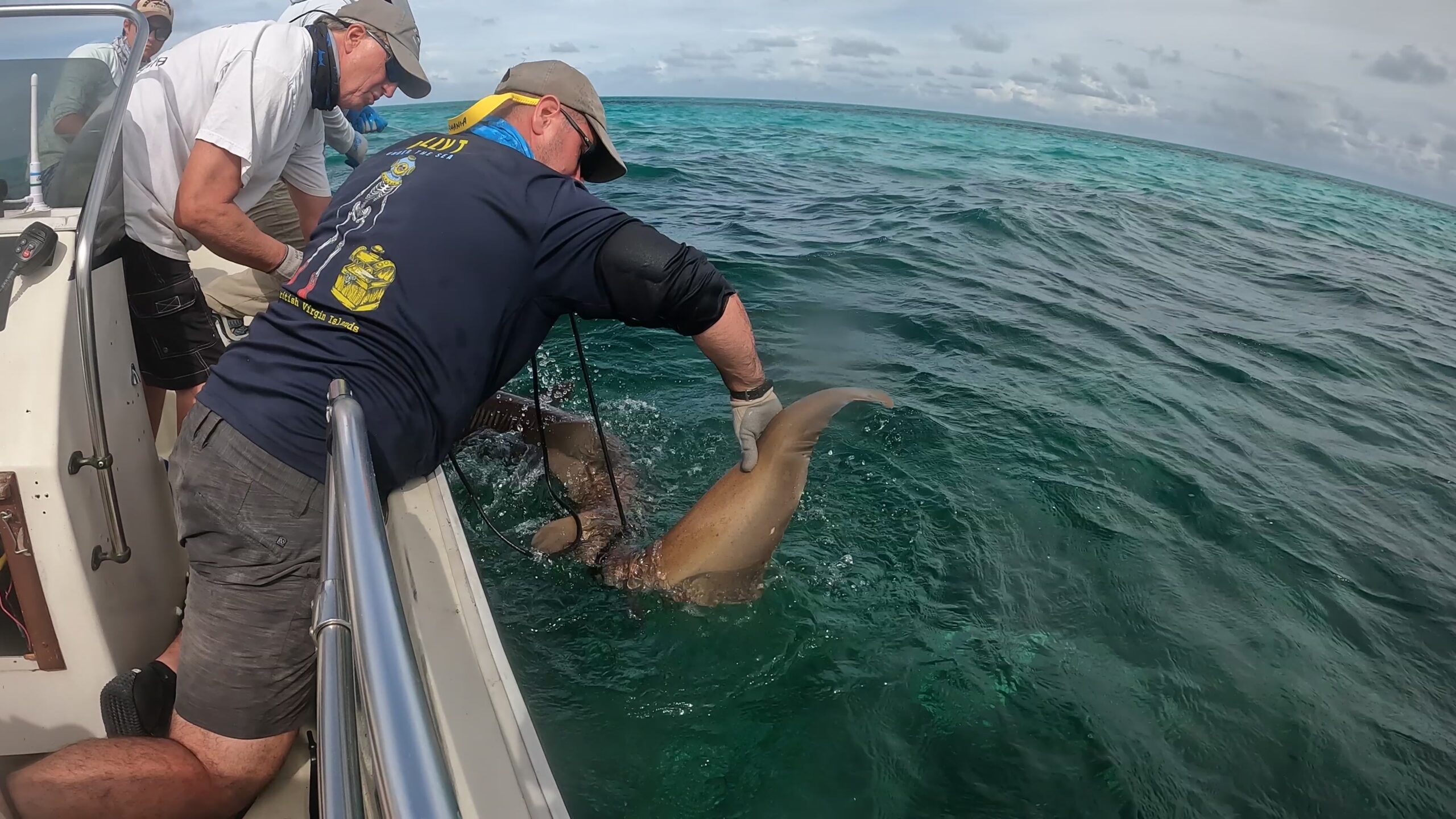 Bryan Legare Tail roping a nurse shark
“Doing this in a scientific method we can elevate the importance of these areas, which can lead to protection. It’s hard to argue against conservation when you have scientific research backing it up,” he added.
Legare’s involvement with the Virgin Islands began in 2009 when he attended the University of the Virgin Islands on St. Thomas for his Master’s in Marine and Environmental Science. In 2021, after reading a paper Legare published based on his shark research, Beyond the Reef, a nonprofit focused on the marine environment and education, contacted Legare and asked if he would help organize a shark research program in the British Virgin Islands similar to the work he had done in the US Virgin Islands. The collaboration kicked off in 2022 when Legare travelled to BVI and worked with the staff at Beyond the Reef to conduct juvenile shark surveys and identify research needs.
“Their dedication to this research and the partnership Beyond the Reef has committed to provides the resources to make this research possible. Beyond the Reef coordinates vessels, captains, housing, bait, and local resources for these efforts in a true partnership,” said Legare.
To date the team has tagged 30 individual sharks from 7 different species including tigers, great hammerheads, blacknose, nurse, lemon, caribbean reef, and caribbean sharpnose.
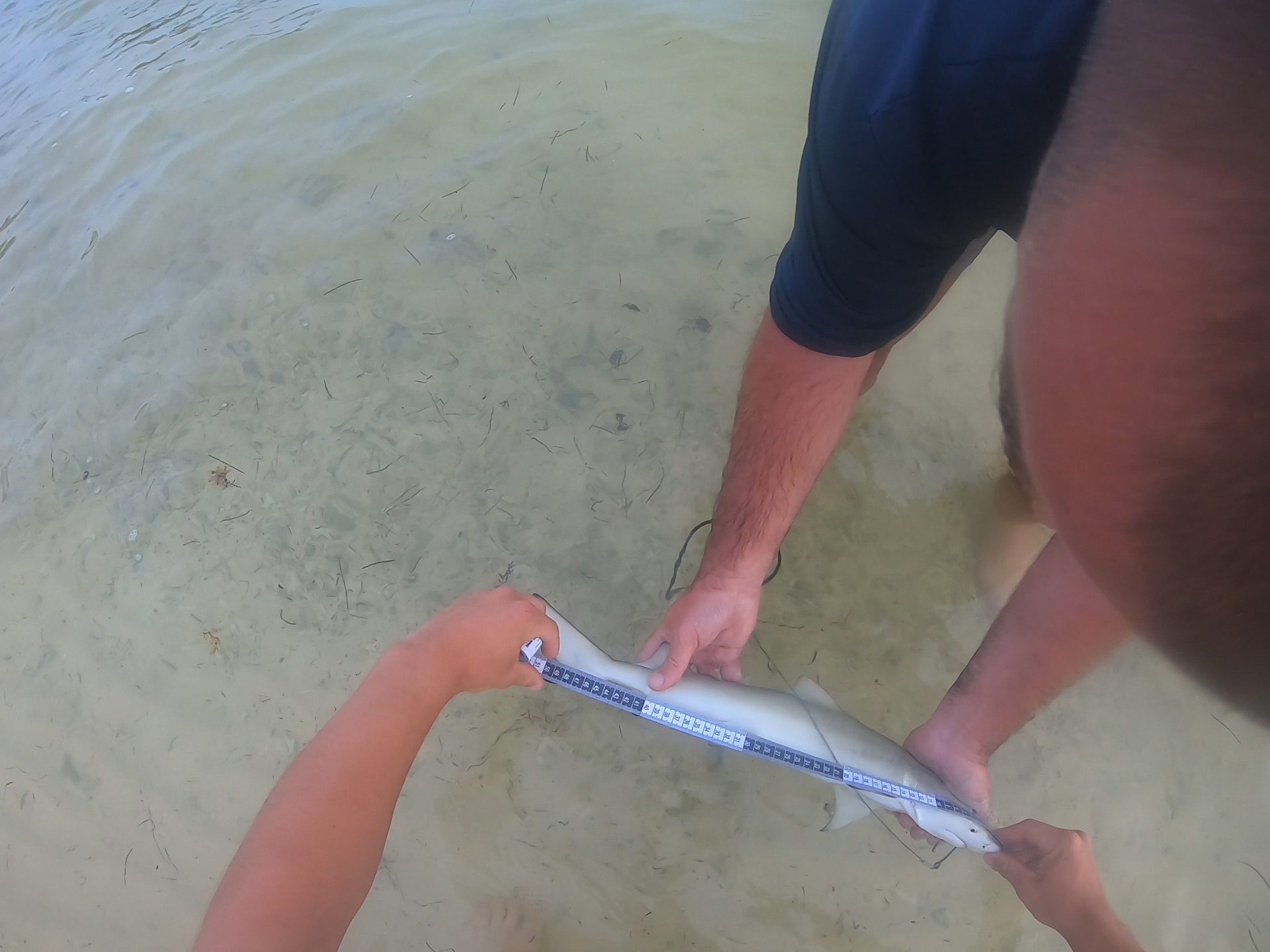 Measuring and Tagging a Neonate lemon Shark along the shores of Anegada.
On this trip, Legare has the support of collaborators Dr. Greg Skomal and Dr. Grace Casselberry. Skomal leads the Massachusetts Shark Research Program and is Legare’s PhD advisor. Casselberry is a PhD at the University of Massachusetts who studies special ecology to inform shark conservation efforts.
Together, Legare, Skomal, and Casselberry have been responsible for the bulk of shark research conducted in the Virgin Islands. Assisting Legare is Center for Coastal Studies summer technician Clayton Nyiri, who is a student at the University of New England.
Until now, there have been limited resources to properly research shark populations in the Virgin Islands. Funding for the research trip to the British Virgin Islands is being provided by proceeds from last winter’s Polar Bear Plunge in Provincetown, as well as by Boston Urban Hospitality, and Bonnell Cove Foundation, and primarily with a grant from UniteBVI.
To further support this important work contact the Center for Coastal Studies or Beyond the Reef.
Photo at top: Satellite tracking of a 9.5 ft female tiger shark Captured off Anegada on 5/30/2023.