
The Rozalia Project is a non-profit organization based in Burlington, Vermont, and active throughout the Gulf of Maine via their research vessel the S/V American Promise. Built for Dodge Morgan in 1985 for his record-setting solo sail around the world, the vessel is a sailing cutter measuring 60ft that is now used as a green platform for scientific research and marine debris retrieval. The organization is one of six partners convened by the Center for Coastal Studies Marine Debris & Plastics program as part of the Gear Extraction And Recovery (GEAR) team founded earlier this year. I had the chance this last week to join the Promise as a crew member with five other volunteers and three full-time crew. We lived aboard the vessel for six nights as we sailed the Gulf of Maine with the plan to clean two specific remote islands of marine debris that had washed ashore in the storms of this last winter season.

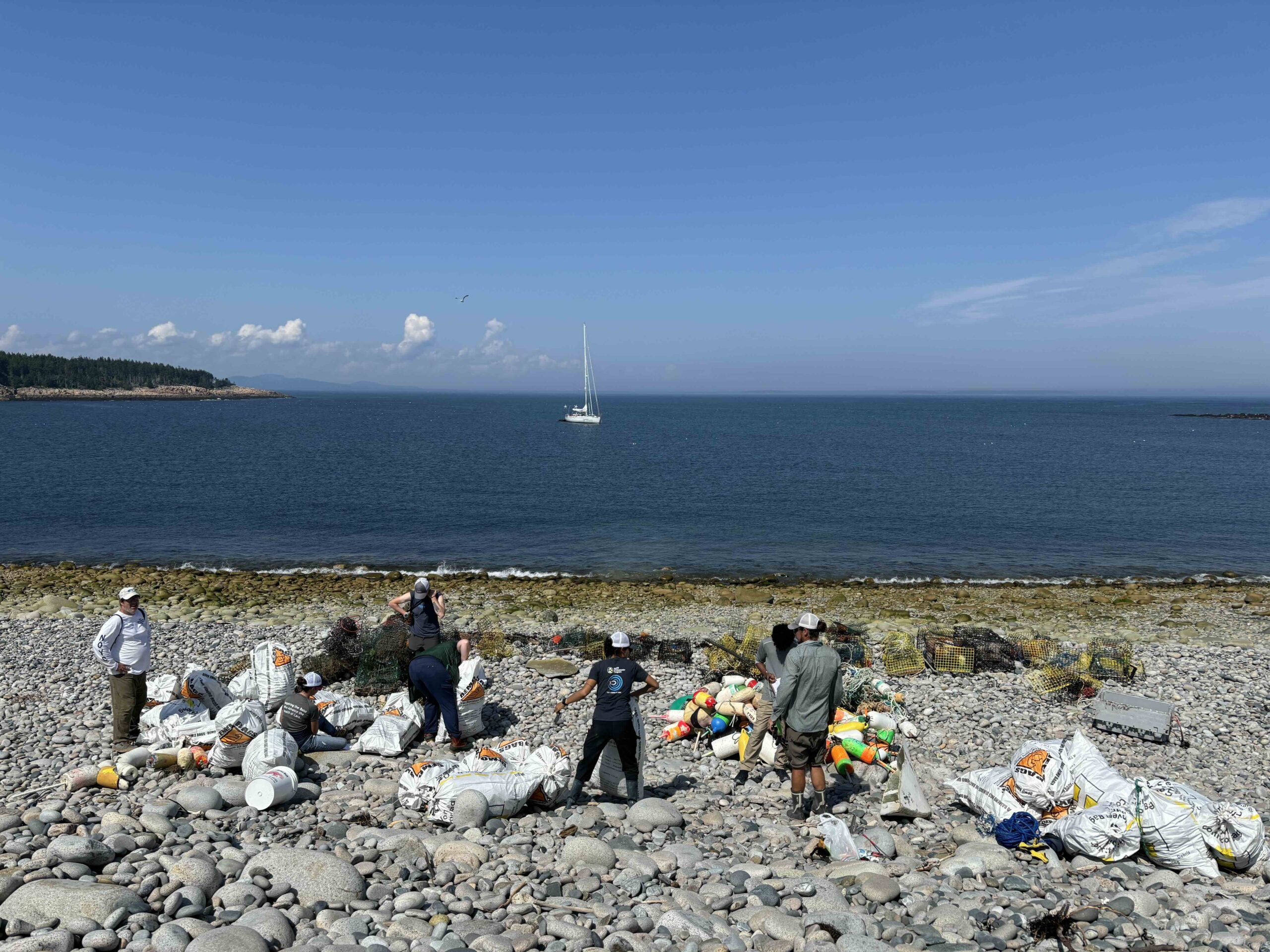
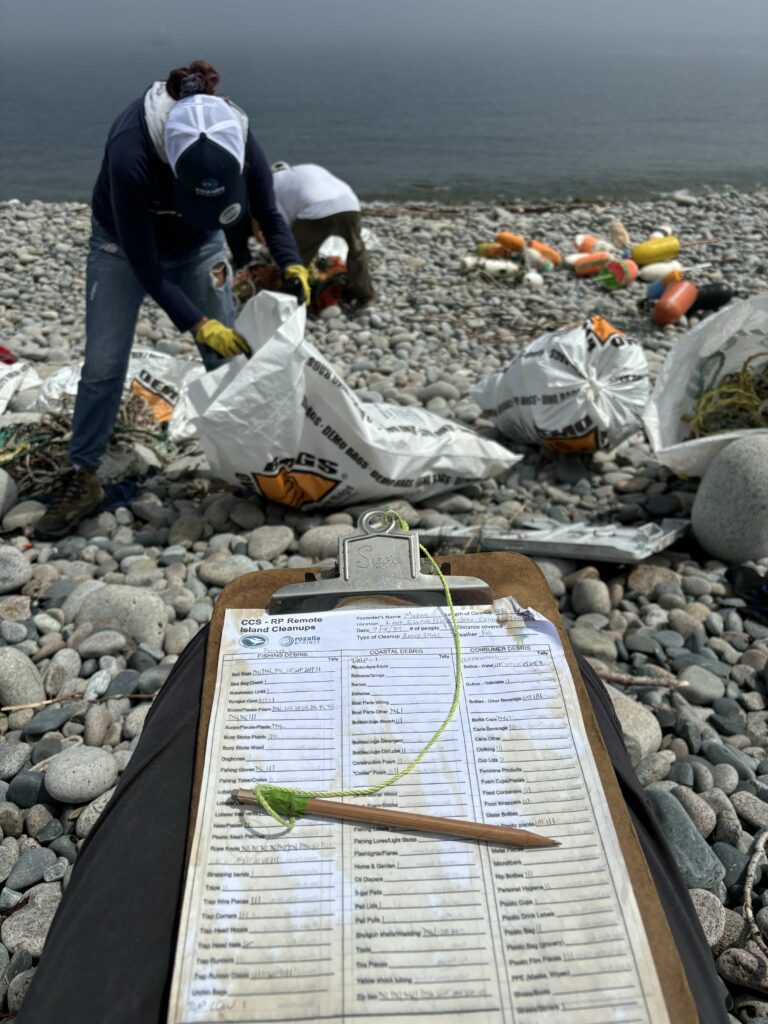
The first day involved sailing from her mooring in Rockland, Maine to Long Island 30 miles to the east. The trip had a steady tailwind and we easily held 6-8 knots for a majority of the day. We arrived at the north cove of Frenchboro, Long Island that sits protected from the southerly wind by an isthmus; and anchored in time to go ashore for a reconnaissance of what the next day’s cleanup would entail. We split into two teams the next day to cover both sides of the isthmus and continued to document and bag debris for around 7 hours. Each item found is tallied on a data sheet and then at the end of the cleanup all debris is also weighed. Trevor Herrick, the regional stewardship manager for the Mount Desert Island region of the Maine Coast Heritage Trust, brought his vessel and a skiff into the cove the next day and we were able to off-load two-thirds of the debris for disposal. The debris he was unable to take was staged so that he could return a few days later. In total from Frenchboro, Long Island we removed 2343 pounds of debris, including 413 single use beverage bottles, 365 rope knots, 310 foam buoys, and 142 zip ties.
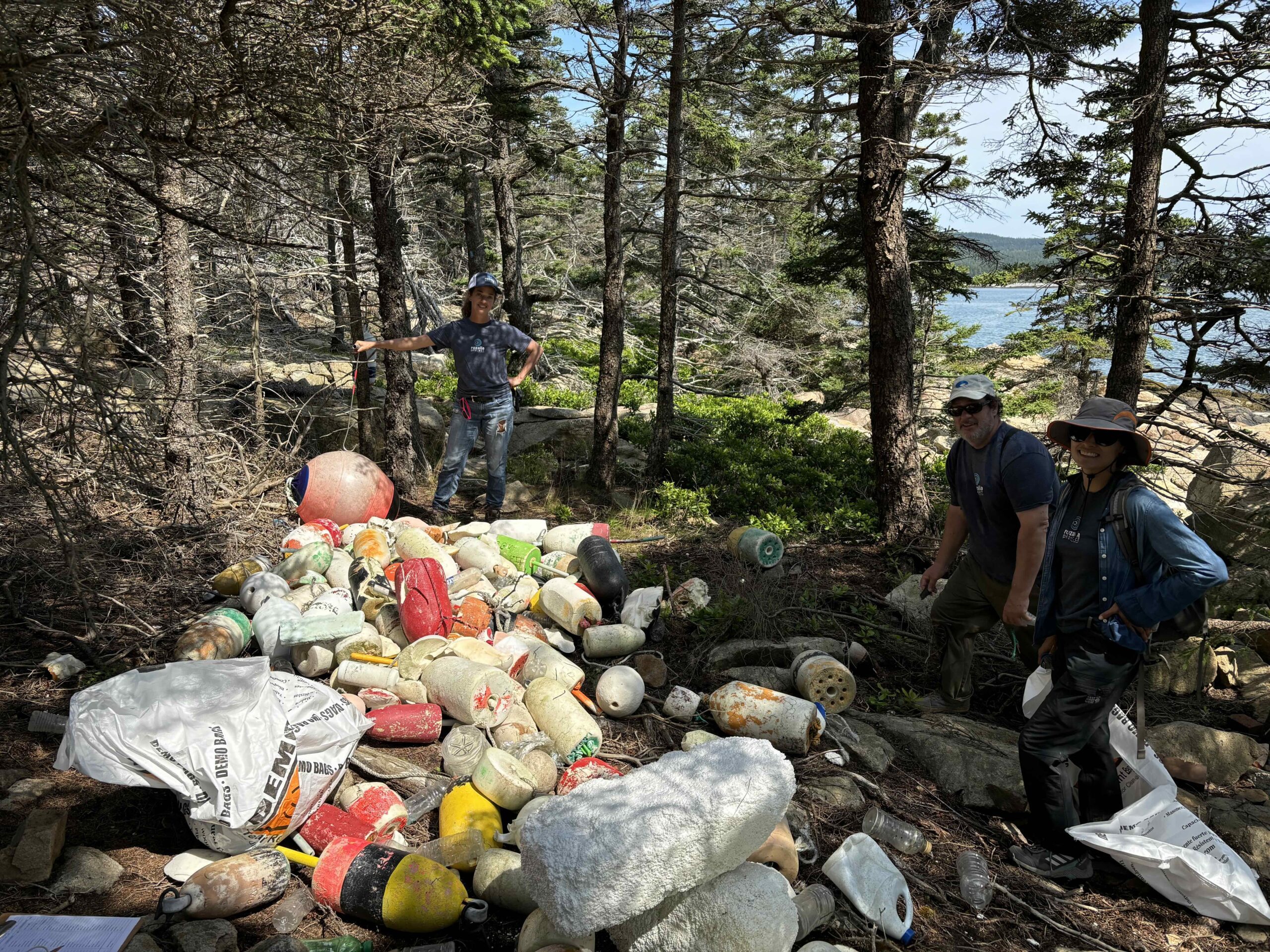
Leaving Frenchboro we sailed west around the north side of Isle au Haut and anchored off the north shore of Kimball Island for the next two nights. The sail that day and the overall area of Kimball Island just south of Stonington, Maine really gives a feel for how many islands are in Penobscot Bay with rounded granite seemingly rolling out of the ocean in any direction that one looks. We landed the following day in the northwest cove of Kimball and hiked across the island to the south-facing Marsh Cove, meeting the only resident of the island, Bob, along the way. He showed us the hot spots for debris in the cove and we had our work for the morning cut out for us. Bob was able to work with the Captain of the American Promise to off-load the debris we found using his skiff and vessel timed with the high tide in the Cove. We then moved to the southern facing cliffs of Kimball to find the woods absolutely overwhelmed with debris, most of which was made up of foam buoys. Once debris was staged, we had a very sporty offloading of the debris to an anchored skiff, using a volunteer’s paddleboard and multiple people in the water (myself included). At the end of this very long day, Bob invited us to his house, which is set on the highest point of Kimball overlooking Isle au Haut, for an outdoor pizza party with his family and friends. We all took turns cooking pizzas in the brick pizza oven and had a delightful reprieve as the nearly full moon rose over the Isle hills. I was really struck by the overwhelming sense of community in this very remote area of the Gulf of Maine and it’s a sense that I am still feeling and want to cultivate now that I have returned to Boston. The next morning we returned to Bob’s dock to weigh everything we had collected, load up his boat and another local fisherman Jason’s boat and take it north to Stonington for disposal. In total from Kimball Island we removed 1881 pounds of debris, including 1038 foam buoys and 459 single use beverage bottles.
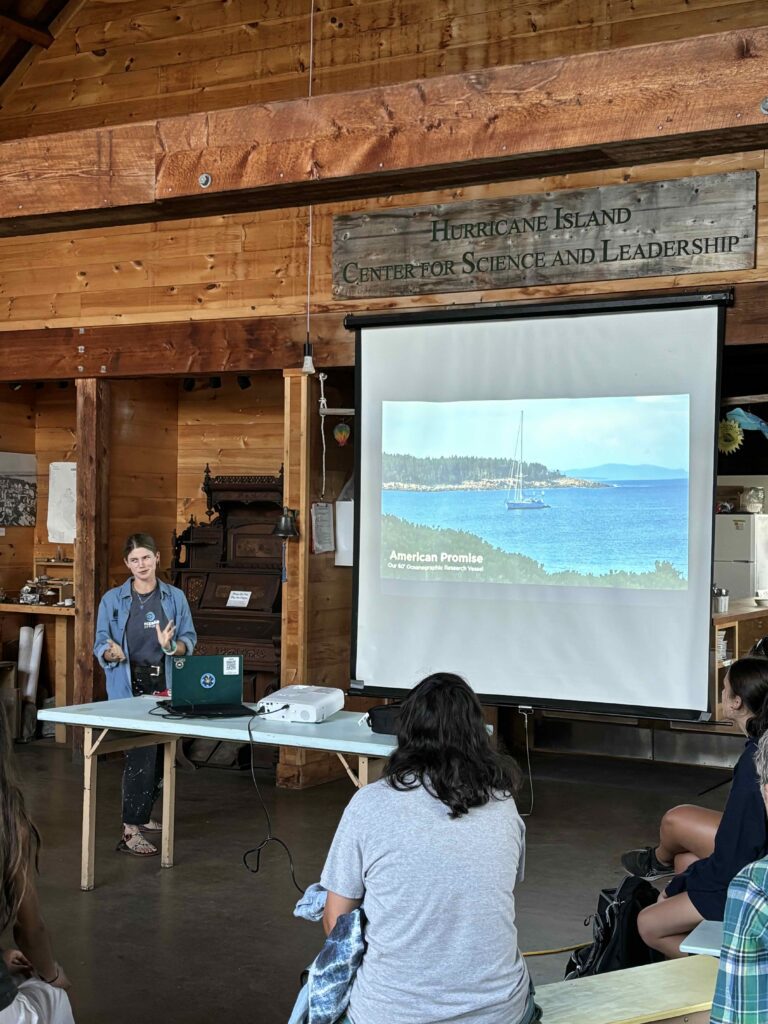
Leaving Kimball that afternoon we sailed west to moor in the harbor of Hurricane Island which was once an industrial town built around a granite quarry and supply company but is now the location of the Hurricane Island Center for Science and Leadership. The center welcomed us onto the island to join them for dinner that evening and then we gave students and staff a presentation of what the Rozalia Project is and what we were doing all week followed by a Q&A with everyone who attended. After one last night aboard, including a stellar full moon rise over the ocean, we made our way back to the safe harbor of Rockland and said our goodbyes. It had been merely a week on board the American Promise but it felt like we had all changed in ways that typically take years. The nine of us had become a community together. We worked to live seamlessly in tight quarters while also cleaning the environment that surrounded us. We questioned each other and ourselves on how we can live smaller, taking only what we need and decreasing our footprint. I’ll take this experience with me into the future and I am very thankful for the chance to join the expedition. If anyone is interested in volunteering with the Rozalia Project, we can put you in touch or reach out to them directly at https://www.rozaliaproject.org/jump-in.

Thanks for reading,
Fritz