The Center for Coastal Studies (CCS) has reported a sighting of the first known fifth-generation humpback whale calf. CCS has been studying the life history of individual humpback whales for nearly five decades. This research has been central to understanding the biology of free-ranging whales, the threats that individuals face and the status of this species along the U.S. East Coast.
The new calf was sighted with its mother during a July whale watch trip off Montauk, New York by the Coastal Research and Education Society of Long Island (CRESLI). CRESLI has been collecting data on whales while simultaneously educating the public since 1996. They shared their calf sighting with CCS, who curates the Gulf of Maine Humpback Whale Catalog. This allowed CCS scientists to determine the particular significance of the sighting. Not only is this the first fifth generation calf documented in a baleen whale population, but every mother in this matriline has also been confirmed to be alive in 2025.
The new member of the population is the great, great grandcalf of Milkyway, a female first identified in the mid-1980s. Milkyway has had 10 calves, including three daughters with calves of their own. In total, 24 members of this matriline have been cataloged to date. Some, like Milkyway herself, are well-known and loved by the public.
Long-term studies of individuals provide a special window into the lives of whales. These species are long-lived and so insights into their life history require decades of effort and dedication. In the Gulf of Maine, the work has been achieved through annual field research by CCS and the sightings contributed by collaborators, including whale watching based data collection programs along the coast. The whale watching industry depends on the information produced by this program as much as scientists and resources managers do. The results of this research supports naturalist education programs throughout New England.
Dr. Jooke Robbins, a senior scientist at CCS, highlighted the challenges of funding these programs, noting that only a few other life history studies of whales across the world have achieved similar longevity. She particularly highlighted important on-going research on North Pacific humpback whales by her colleagues at Glacier Bay National Park in Southeast Alaska. She said “It is important for programs like ours to continue given their insights into how whales live, the threats that they face and what population recovery looks like in our modern world. Whales can be bellwethers of the marine environment, and their fate is entwined with our own. The work that these programs do each year may very well help us to understand and predict what happens next for whales like Milkyway’s lineage, and perhaps for ourselves as well.”
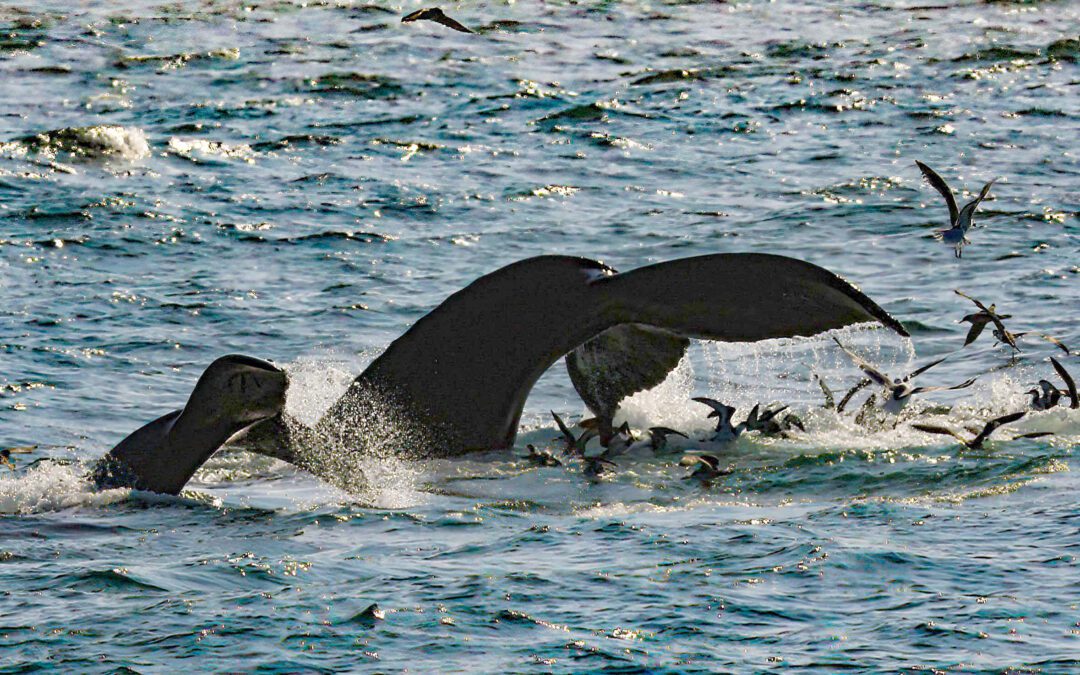
Photo: Fifth generation humpback whale calf with its mother, Saucer. Photo credit: Marianne McNamara, CRESLI.