More than 500 seagrass scientists and engineers gathered in Naples, Italy last month for the World Seagrass Conference. The Center’s seagrass expert and Director of SeagrassNet, Agnes Mittermayr, Ph.D., was among them.
The conference, which ran from June 17 to 21, was an opportunity for Mittermayr to let people know that SeagrassNet, an international seagrass database, is under new leadership, and will soon launch a new website. (The new site is currently in beta testing and will go live by the end of the summer.)
It was also a chance for Mittermayr to check in with partners who gather and share data from around the world on SeagrassNet, and to recruit new collaborators. To facilitate that, she set up an information table and poster which allowed for one-on-one discussions with attendees in between talks.
Seagrass beds are vital ecosystems that account for 25 percent of the world’s fisheries production, providing food, shelter, and nurseries for small animals. And like coral reefs, salt marshes, and mangrove forests, seagrass meadows filter coastal waters of nutrients, sediments, and contaminants. They also account for 10 percent of the ocean’s carbon sequestration. But they are under threat from warming waters and human impacts.
“People were really excited that SeagrassNet is being dusted off and will be updated and made more inclusive by branching out to citizen scientist groups,” said Mittermayr.
Also attending the conference was Mark Borrelli, Director of the Center’s Seafloor Mapping Program, who presented a poster titled “Rapid and Broad Area Detection, Classification and Localization of Seagrasses in Very Shallow Waters Using a Phase-Measuring Side-scan Sonar.”
The World Seagrass Conference is held every two years and coincides with the International Seagrass Biology Workshop. The theme of this year’s conference was human impact on seagrass. The gathering is a chance for seagrass scientists to get together to discuss multiple topics such as seagrass restoration, mapping, genetics, and the impacts of climate change.
This year, said Mittermayr, attendance was more than double past conferences. She attributes that to increased awareness about seagrass in general, as well as climate change, and biodiversity.
“For me, the conference was more about community than science, because you can’t do science without a community of scientists,” said Mittermayr.
Photos above:
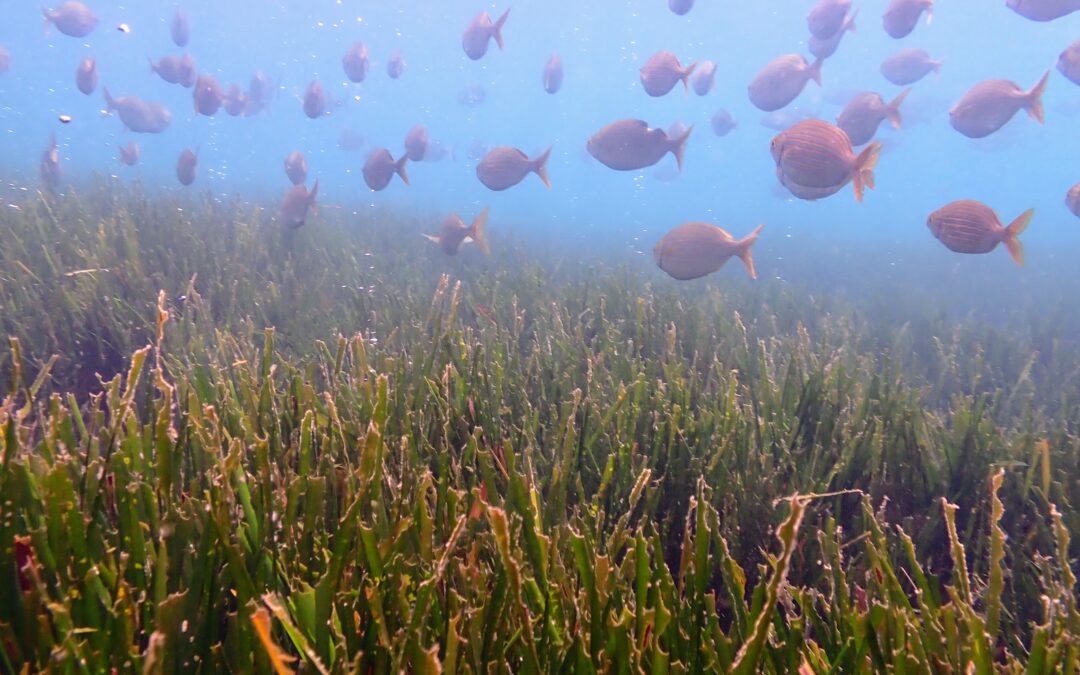
Seagrass beds at Ponte Aragonese on Ischia Island. The seagrass is Posidonia oceanica and the fish are Sarpa salpa.
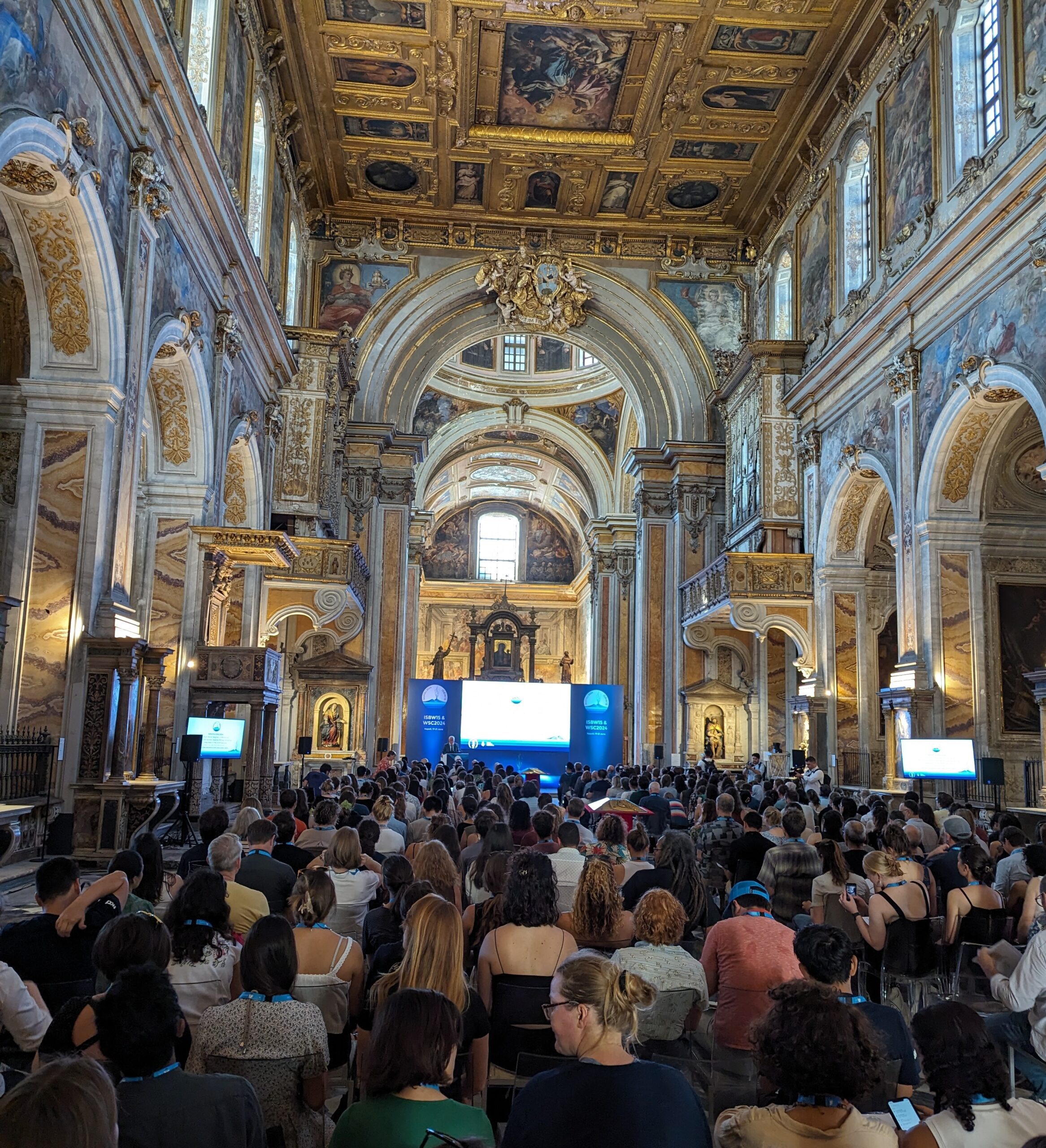
The conference was held in Santa Maria la Nova, a former church and monastery in central Naples.
Photos by Jon Lefcheck