
A blog post by Fritz McGirr, Marine Debris Operations Assistant
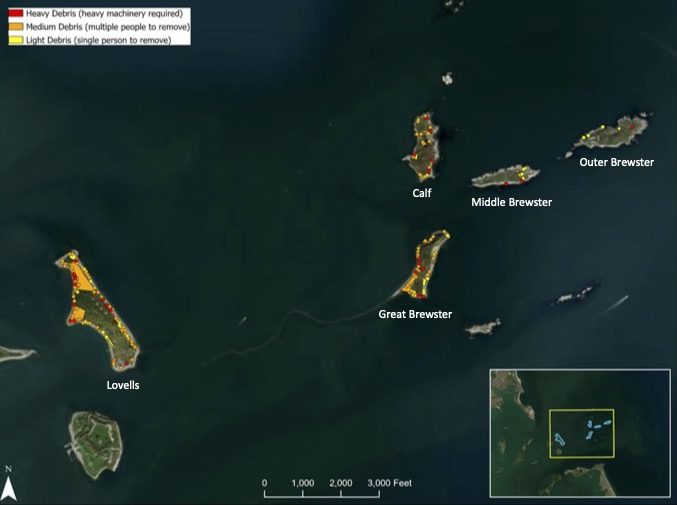
Situated between seven and nine miles out into the harbor from Boston’s city center lie five of the 34 islands making up the Boston Harbor Islands. These five outer islands take the brunt of the wind and water energy coming from offshore and are therefore the most susceptible to accumulate marine debris over time. After two years of planning, the CCS Marine Debris & Plastics Program led a coalition of five federal, state, and non-profit organizations that consisted of the National Oceanic and Atmospheric Administration (NOAA), US Fish & Wildlife Service (USFWS), National Park Service (NPS), Massachusetts Department of Conservation and Recreation (DCR), and Boston Harbor Now (BHN) in a large-scale effort to clean the debris from Lovell’s, Calf, Great Brewster, Middle Brewster, and Outer Brewster Islands. This will be the very first time that Middle and Outer Brewster Islands have been cleaned.
For my part in the operation, this project consisted of months of group calls, discussions of tides, questions of implementation, vessel sourcing, vessel landing, talking with contractors, disposal logistics, volunteer wrangling, and mainly, how the heck are we actually going to pull this off during one single week in September? My personal knowledge of the outer islands was limited to say the least, mostly recognizing them from going by on a ferry or whale watch vessel. I’m familiar with the underwater topography in the area from a few dive trips to Graves Island or the infamous “trash barges”, but I had never seen any of these five islands up close until my first reconnoiter trips with DCR at the beginning of July. At this point we were not allowed to set foot on the islands because of nesting birds but we conducted a “flyby” of the islands to have a closer look at landing options and identify where gear could be staged and later picked up. DCR gave us a look at the yurts we would live in for the week on Peddocks Island and we made contact on this trip with Mike McDevitt of Acushnet Marine in Hull who would later become key to local knowledge and an integral part of this operation as a whole.
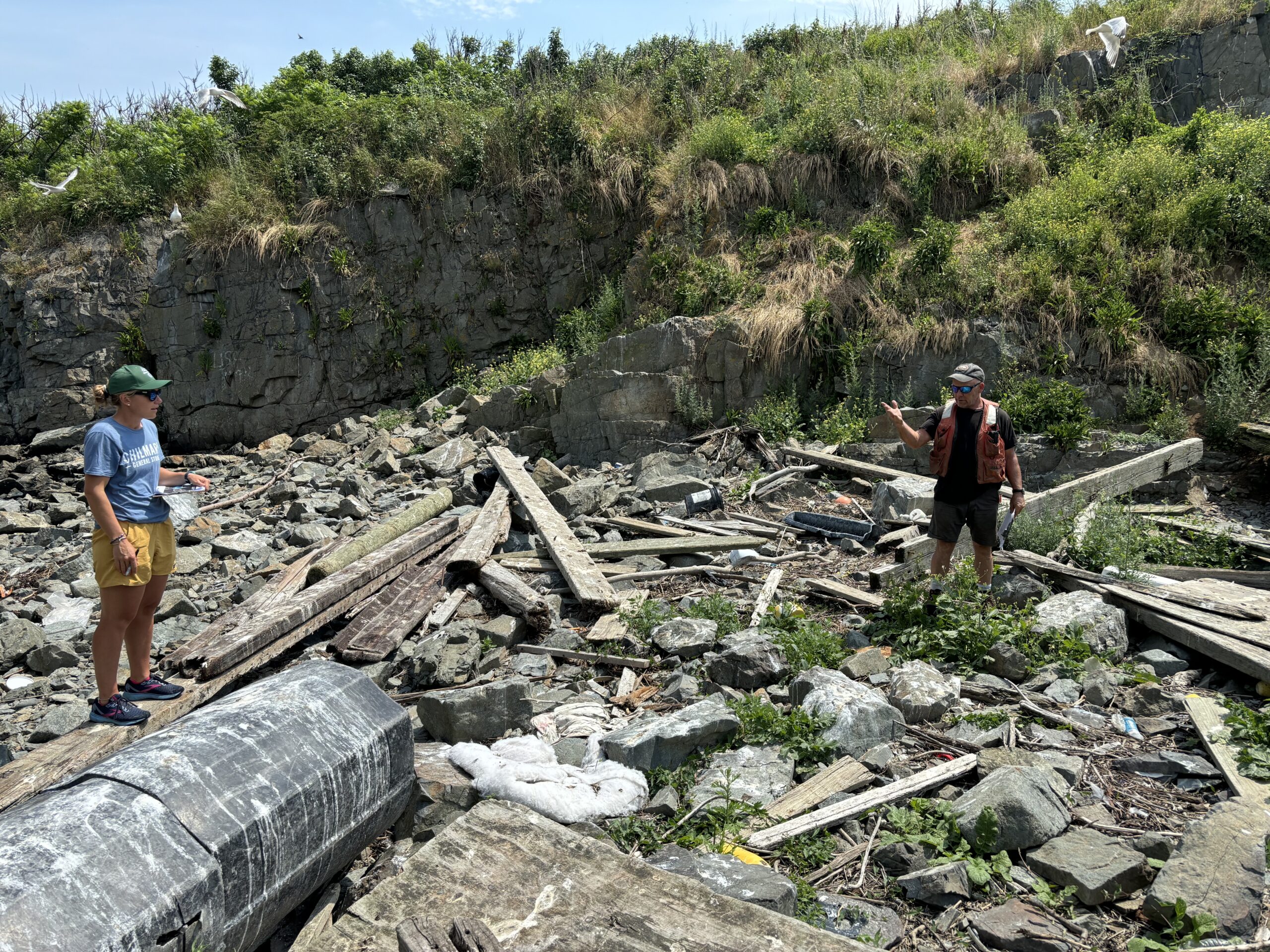
In mid July we had another chance to join DCR to put feet on Outer and Middle Brewster Islands, the two islands that would provide the greatest logistical challenges out of the five with rocky reefs, steep cliffs, and overall unforgiving shorelines. At this point we had decided Mike McDevitt should be on point for the heavy lifting so he was able to join me and Belle Procaccini of DCR on the scouting mission. This day gave us valuable information as to the scale of debris we would be removing from these hard to reach islands as well as how to begin formulating our plan of attack.

The next two months consisted of gathering volunteers who might actually want to commit to this adventure and figuring out how on earth we might feed them, finalizing paperwork with the contractor and subcontractors, finalizing vessel schedules during the cleanup week (we would eventually use 7 separate vessels during this week from DCR, UMB, and volunteers), and finally training our volunteers and partner organizations on conducting a wilderness debris cleanup.
September 14, 2024 was the kickoff event with Boston Harbor Now conducting an organized cleanup of Lovell’s Island with a group of their own volunteers. While they were on island, I began the process of ferrying gear to Peddocks Island with the help of my own crew to move into the yurts and visitor center we would call home for the next week.

Our residential volunteers arrived the next day and were given an orientation on island life and what to expect during their stay. As Sunday gave way to Monday, we noted signs that nature was going to throw a curveball. The good weather window was quickly shrinking, now showing three good days and then deteriorating, giving way to 40 knot winds and 8-12 foot swells in the outer harbor by the end of the week. Needless to say, we were going to spend 72 hours laying siege to the debris on these islands while we could.
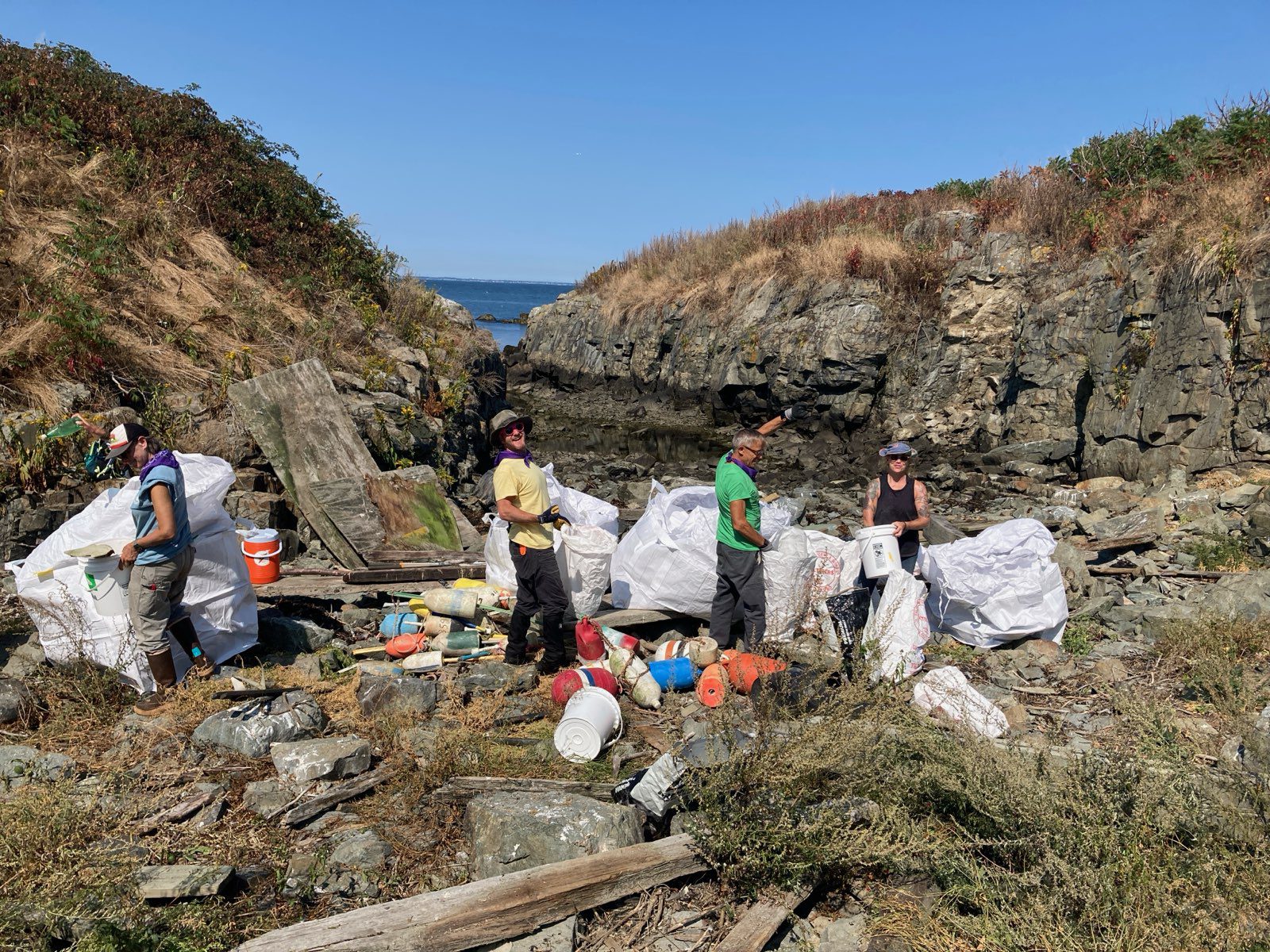
We split all volunteers into five teams, one for each targeted island. I led a team of six extra hardy volunteers assigned to Outer Brewster Island; a difficult puzzle of cliffs, canyons, WW2 bunkers, and some of the densest blackberry thickets I’ve ever come across. The first order of business was to survey the area and make a game plan. The east point of the island has a narrow channel that faces northeast and is unprotected against winter storms. The channel opens into a circular cove within the island that has collected and trapped decades of heavy treated wood debris above the high tide line that is holding all manners of foam, buoys, bottles, jugs, floats, mats, and other plastic debris. Every board, beam, and pole we removed unveiled hundreds of bottles and other debris beneath, but the team was dedicated and set to work on the area. There is another cove with debris just to the west and I decided a path should be established to connect the two areas. Mark Adams, another CCS staff member, and I worked together to blaze a trail through the brambles and sumac and were able to establish this connection. The rest of the day was spent bagging plastics into 50cuft supersacks and stacking wood into piles.

Day two, the team knew what to expect and were chomping at the bit to get to work on the island that had haunted their dreams the night before. Mike McDevitt’s team was going to deliver a float as far into the channel as possible at the 11:00am high tide that we could then load with all of the debris we had staged. With the weather coming up the coast, the float would be picked up on the next day’s 12:00 high tide which gave us one day to cut wood, bag plastic debris, and have everything loaded onto the float. Half of the team split away to the other beach and bagged plastics there while we finished the main cove. We left that day headed back to our yurts with the float partially loaded with wood and we knew there would be a lot to finish the next morning.
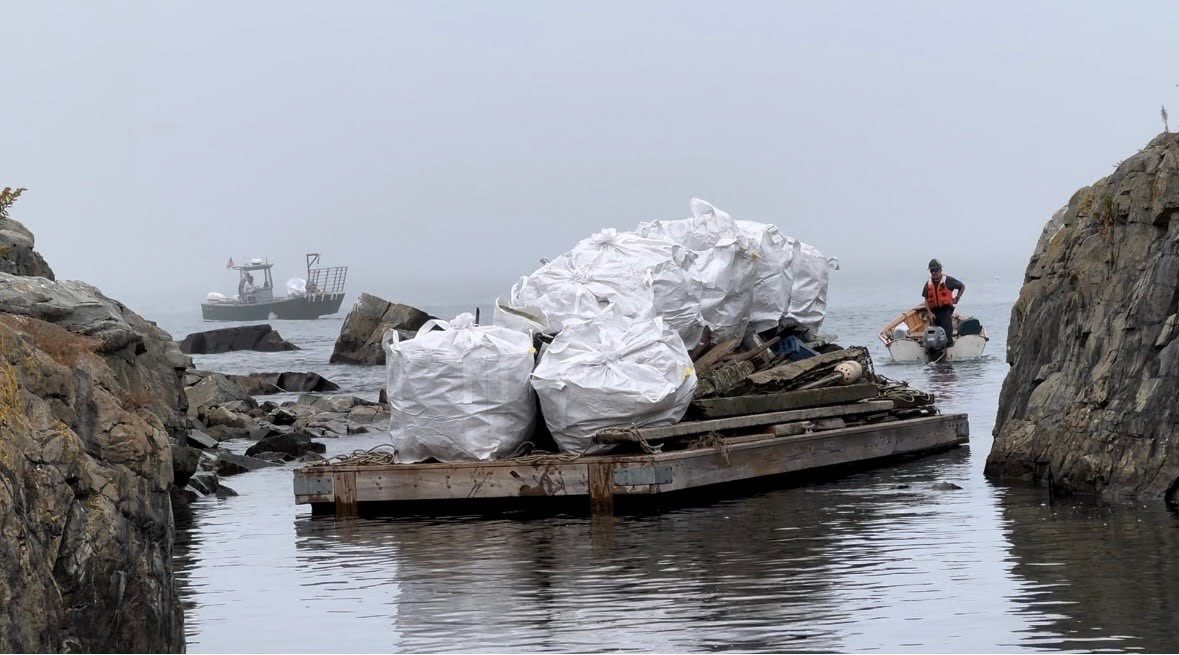
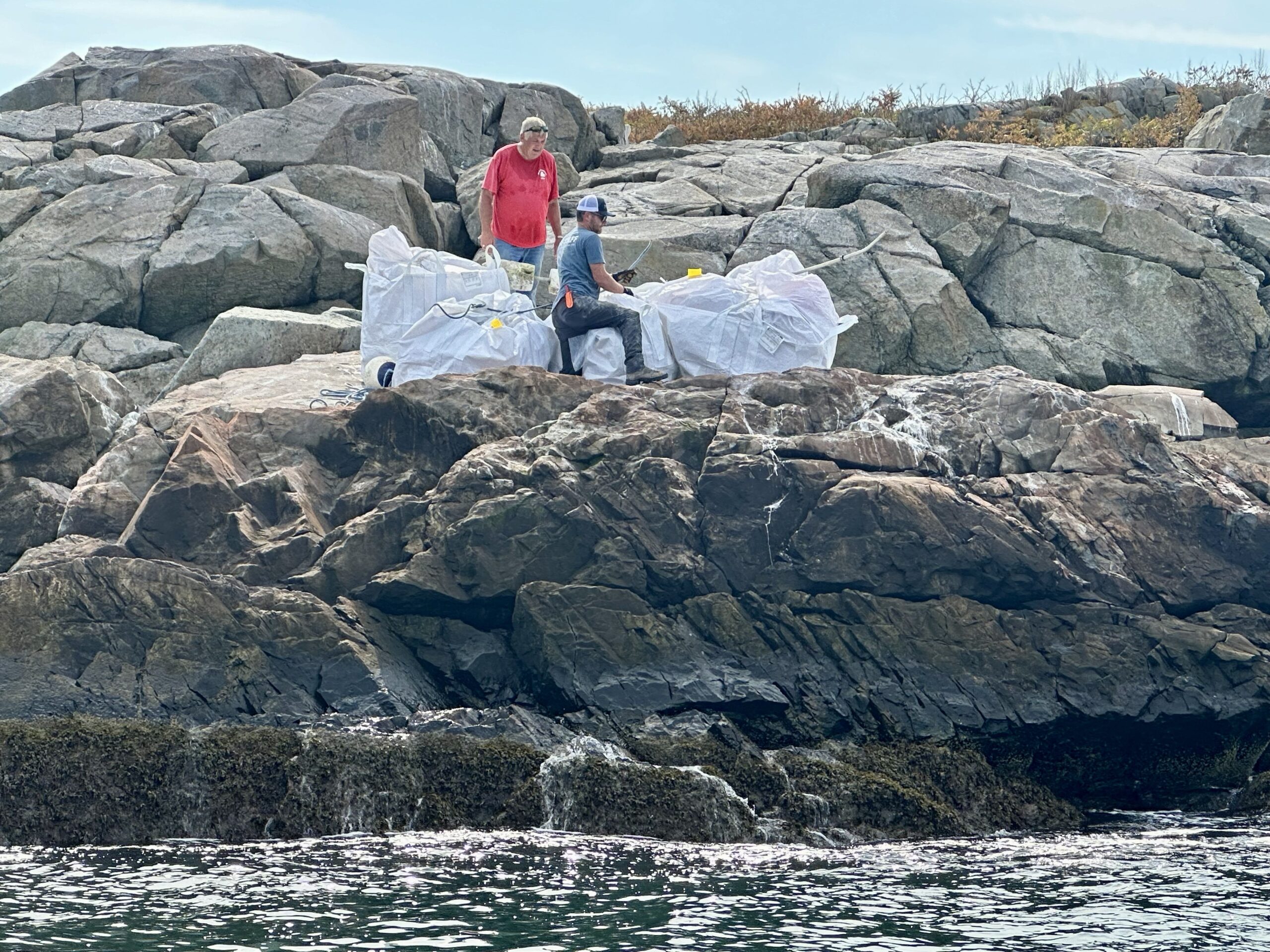
Day three began in earnest, knowing we had to be finished with the outermost two islands by the end of the day. The weather on Thursday would not allow us to land on either Outer Brester or Middle Brewster Islands. The float was being picked up at noon and we had to load it with as much of the heavy wood as possible. The team worked tirelessly and had the float stacked high by the time the tide was up and the contractors arrived to tow it out of the channel. A thick fog had also rolled in, setting an ominous tone for the weather to come and obscuring the Boston skyline and other islands in the harbor that we had been able to see so clearly the days before. There were still 6 supersacks of debris that had to be picked up from the channel and another 4 sacks in the cove to the west. The DCR captain was able to maneuver the landing craft close enough in the escaping tide for the sacks to be floated out of the channel and loaded aboard. That debris was unloaded in Hull where the weighing and sorting would take place and the landing craft returned to us to load ourselves and the final sacks and we bid farewell to Outer Brewster Island.

The next day, teams were sent only to Lovell’s, Calf, and Great Brewster Islands because of the growing surf. I landed on Calf Island with a small group to move debris that had been collected to the established staging areas. We were able to complete the staging before all teams were called off the islands after only a half day of work. By Friday the winds and surf allowed us to only approach Lovell’s Island so I took a group ashore there to finish staging debris while the other volunteers sorted debris in Hull. We were able to collect a sizable number of lobster traps that hadn’t been removed yet and staged them with a pile of treated wood for later pickup. At this point, the weeklong cleanup was complete and debris that had been collected in Hull was ready to be sorted, tallied, and weighed. This was completed in pelting wind and rain with a group of volunteers who didn’t stop smiling the entire time.
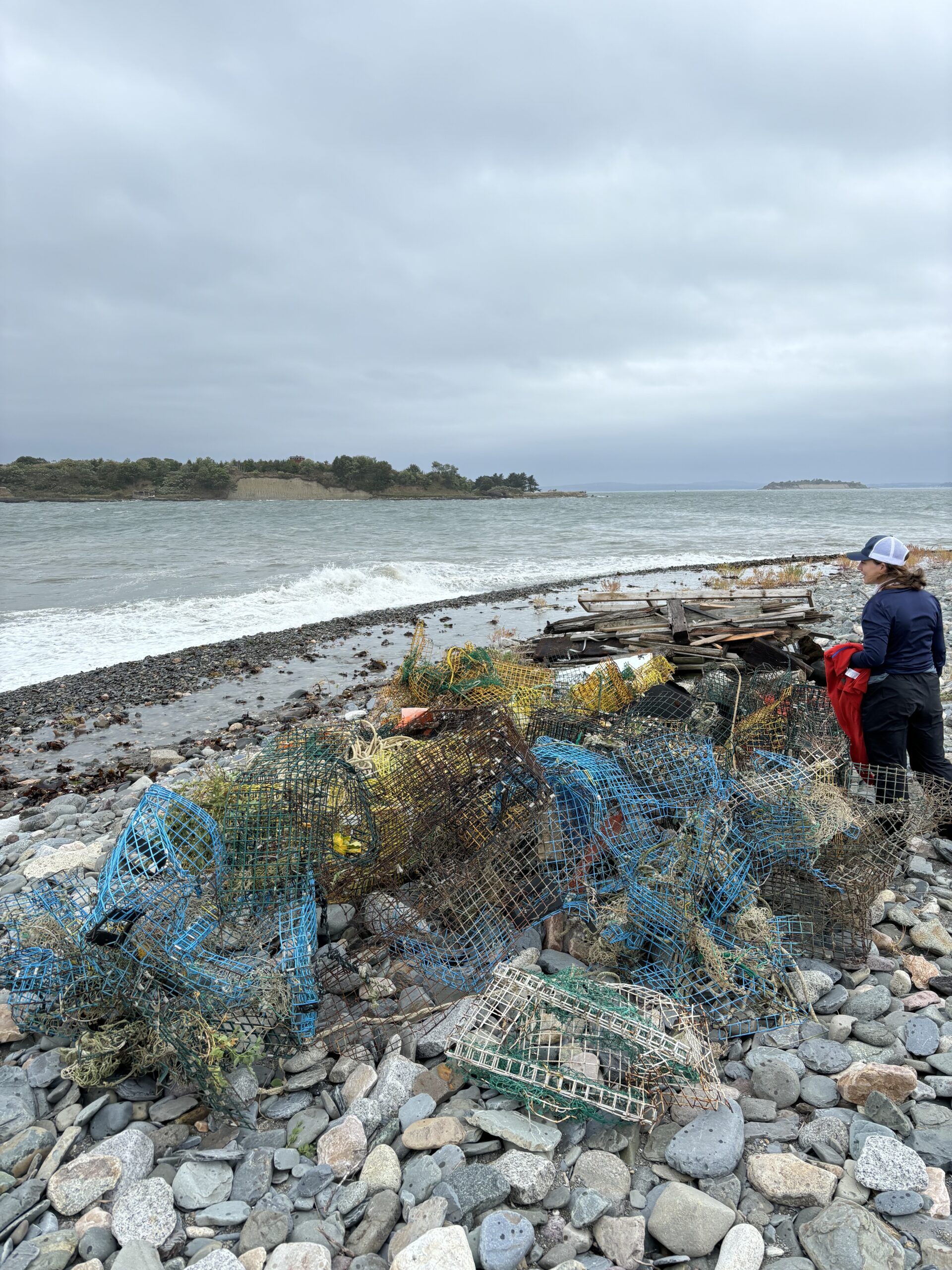
The remaining debris that had been staged on Calf, Great Brewster, Middle Brewster, and Lovell’s Islands was collected over the next two weeks. It was another three full days of work to load another float on Lovell’s, move around 150 lobster traps on Great Brewster, grab the encapsulated foam floats and supersacks off Calf, and finally drag the last six supersacks off of Middle Brewster using the DCR landing craft.

In the end, the amount of debris we had taken off these islands was staggering. We had removed 7,940 lbs of wire lobster traps, 2,843 lbs of foam, 471 lbs of plastic bottles and jugs, and over 12,000 lbs of treated wood. All in all, there was over 35,000 lbs of debris removed that had been littering these islands for decades. This cleanup was an interorganizational effort of monumental scale and it would have been impossible without the nearly 80 volunteers that came out in force ready to lend their blood, sweat, and tears to lessen the human impact on these beautiful islands. There is a soft spot in my heart for the Boston Harbor Islands now and I hope I can continue visiting and working to clean them into the future.
Thanks for reading along with this adventure.
Fritz