March 1, 2023
R/V Shearwater
We were able to squeeze in a research cruise on R/V Shearwater during a small window of good weather and daylight. The aerial team had already been up in the air for a few hours by the time we got out on the water, so we were able to target the areas where they had already seen right whales. Thanks to the aerial team, we were able to start photographing whales half an hour into the cruise.
The first whale that we came across was Champagne (EGNO 3904), who was busy high skim feeding. She was feeding with her rostrum out of the water, allowing us to see her callosity pattern as she swam around the boat; this feeding behavior also allowed for some great shots of her feeding in front of the Pilgrim Monument. Christy (chief scientist) and Sasha (habitat ecology intern) were able to collect a plankton tow behind Champagne in order to see what she was feeding on. Spoiler: it was lots of calanus, which is thought to be right whales’ preferred plankton. After Champagne, we quickly popped over to a low energy SAG and then headed down to Wellfleet to check out the whales that the plane had seen just off Great Island.
Off Great Island we found ten right whales spread out across a few kilometers—all feeding! Domino (EGNO 3951), Horton (EGNO 3360), and Marble (EGNO 2602) were among the whales that were feeding. This was my first time seeing all of these whales in person, which was really awesome because I’d processed data from R/V Ibis when they saw Domino in January. However, the coolest part of this sighting was the distinct smell in the air—like the rind of a melon. I’d thought that right whales must just have great breath, but it was actually the calanus that they were feeding on! I’m looking forward to going out next week and smelling more plankton.
Bonus fact: the Dutch House of Orange is called so because they loved the deep orange color that a particular substance left on wool. That substance? Right whale feces. Rich with the orange from the lipid sacks in calanus.
– Molly
Click a thumbnail image for a larger view.
-
- Champagne/EGNO 3904 skim feeding.
-
- Champagne/EGNO 3904 skim feeding.
-
- Provincetown at night
-
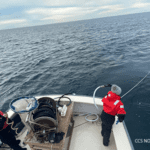
- Plankton tow
-
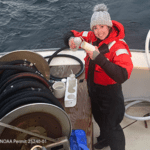
- Sasha Milsky collects samples
-
- Molly Tucker
-
- Sasha Milsky
March 1, 2023
Aerial Survey
We ushered in the month of March by flying a survey of Cape Cod Bay. With a week of poor survey conditions, we weren’t quite sure what we’d find. Taking off out of Provincetown, we had to skip down a couple of tracks to avoid Beaufort 5 sea state off of Race Point. We started our survey on our usual trackline 3, and began working north to south.
It wasn’t long before we found our first two whales, feeding near Wood End in Provincetown. These individuals, #2048 and Champagne (#3904) were both new this season. They were feeding in a small patch of zooplankton, making frequent, fast turns as they mowed through their prey.
We continued on, sighting two surface active groups – each with a pair of animals. The first SAG had #3640 stroking Squilla (#3720). Interestingly, as we continued flying, we ended up documenting many of Squilla’s family members. New for this season, her mom, Mantis (#1620) and her half-sisters, Nymph (#4020) and #4520 were all in the bay feeding. Squilla’s first calf, born in 2021, was sighted by our team, entangled, earlier this season. Despite attempts to cut the gear wrapping around it’s tailstock and around the flukes, Squilla’s young progeny remains entangled. Although it was last sighted outside of Cape Cod Bay, with any luck, it’ll return soon and give our disentanglement team another chance to remove the entangling rope.
We found a large number of whales a few miles west of Wellfleet. Many familiar faces joining us are new for the season. We had adult males Tux (#3401) and Prescott (#2271) make their annual appearance, as well as adult females Callosity Back (#3760) and Monomoy (#4313).
Conditions continued improving as the day progressed, but all seemed rather quiet in the south of the CCB. We concluded the survey by flying up the ocean side of the outer cape and finishing off the first two track lines we had skipped at the beginning of the day all without any large whale sightings. Since we’ve found a large number of new individuals, we suspect it’s only a matter of time before we have high densities of right whales feeding in Cape Cod Bay.
– Amy
Click a thumbnail image for a larger view.
-
- EGNO 1620/Mantis
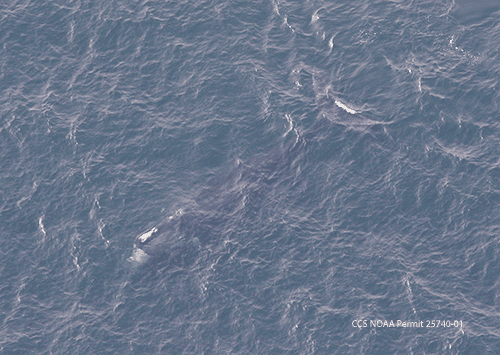
-
- EGNO 3401/Tuxedo

-

- EGNO 4020 & 3060/Nymph
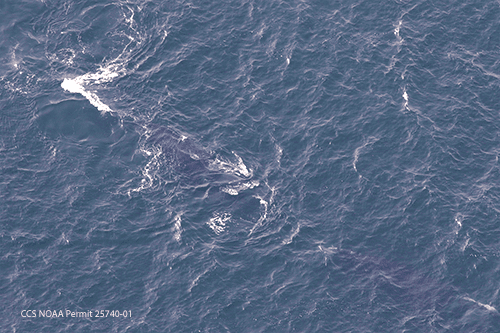
-
- EGNO 4520
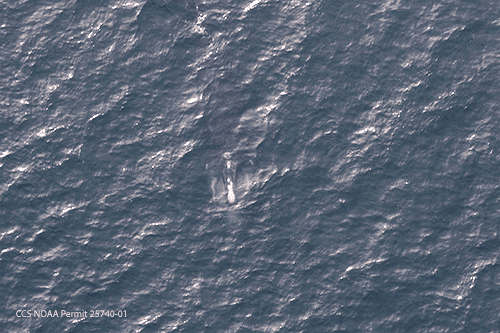
-
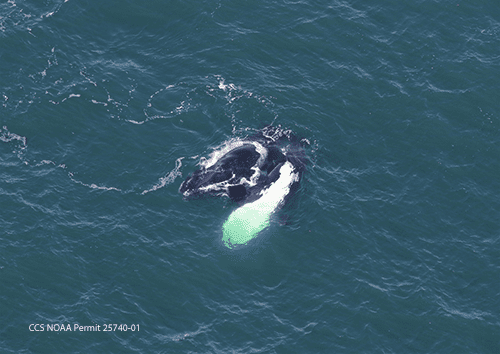
- EGNOs 4605 & 5001 Surface Active Group
March 5, 2023
Aerial Survey
We took off from Provincetown just before 10 am and tracked down the east coast of Cape Cod to start a south to north survey of Cape Cod Bay. With recent boat-based surveys showing an influx of Calanus finnmarchicus, the favorite food source of right whales, we were eager to see whether there would be an uptick in sightings of whales.
Conditions were pretty rough down the eastern shore, with big east swells and a westerly breeze creating rippled seas pockmarked by numerous white caps. We hoped that shelter from the swell in the Bay would lead to more suitable survey conditions.
After two track lines in Cape Cod Bay, we sighted the 2021 calf of #1145 Grand Teton foraging in a rather precarious location: just outside the eastern entrance to the Cape Cod Canal. We documented the whale’s location and made contact with Cape Cod Canal traffic control to alert them to this whale at high risk for vessel strike. Continuing on our survey, we kept an ear to the radio.
Southwest of Wellfleet we spotted an aggregation of feeding right whales. Conditions were difficult, with sea state rising to a 5 on the Beaufort scale and winds pushing 30 knots at altitude. We made the best of it, capturing good photographs of seven whales, including #3680 Seadragon and #4353. This was our first sighting of both of these whales for the year! Seadragon’s mom, #1812 War, was spotted by survey teams in the southeast with a calf this year. Hopefully it won’t be too long before we see Seadragon’s new half-sibling and their mom in the bay!
We were called back to the east end of the Canal to help guide vessels from both the Coast Guard and Massachusetts Environmental Police toward the 2021 calf of Grand Teton for monitoring. While we could clearly see the whale from the plane, the vessels didn’t have good eyes on the young whale until they were within 50 yards or so. This highlights how easily missed, and at risk to boat strike, right whales can be when they’re feeding just below the surface, a common behavior this time of year.
We were alerted to a second whale near the canal, this one at the west entrance to Buzzards Bay where another Environmental Police vessel was standing by. Circling just off the campus of Mass Maritime Academy, we documented the whale as the 2022 calf of #1817 Silt. A second young whale in or near this busy shipping lane! While whales generally enter the Cape Cod Bay from the north, we do occasionally see right whales taking the hazardous shortcut through the Canal. These sightings led to the temporary closure of the Cape Cod Canal to all vessel traffic.
We are grateful to Cape Cod Canal traffic control, the Coast Guard, and Massachusetts Environmental Police for clear communication and their efforts toward keeping these whales and mariners safe.
– Will
Click a thumbnail image for a larger view.
-
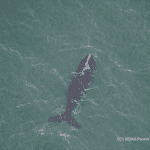
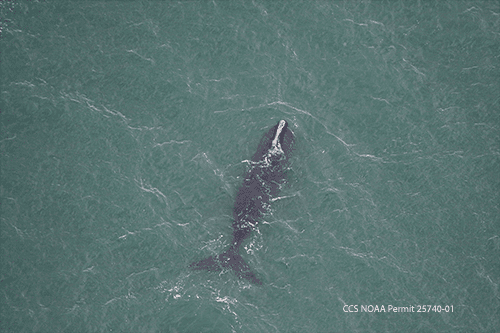
- The 2021 calf of EGNO1145 feeding near Cape Cod Canal
-

- The 2021 calf of 1145

-
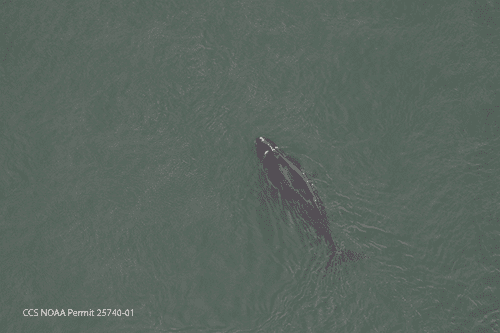
- The 2022 calf of EGNO 1817 swimming at the Buzzards Bay entrance to the Cape Cod Canal.
-
- The 2022 calf of EGNO 1817
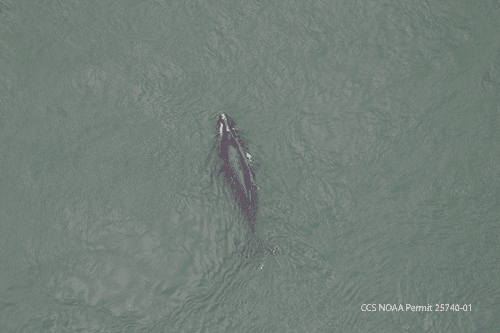
-

- The 2022 calf of EGNO 1817

-
- The 2022 calf of EGNO 1817

-
- EGNO 3410/Tux skim feeding
March 10, 2023
R/V/ Shearwater
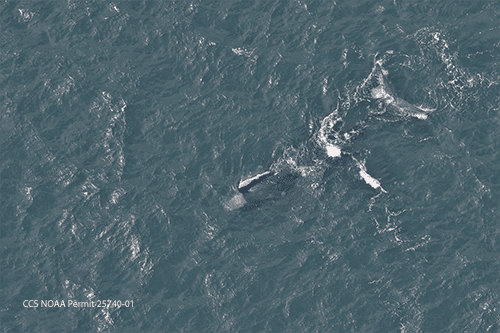
Well folks, good news! For those of you following along at home, I did get to smell that distinctive melon smell of the calanus again on the Center for Coastal Studies Right Whale cruise on Friday. Even better? I got to taste the calanus (both on a cracker and just from the mesh). It felt like a real Skittles moment—I got to see the calanus, taste the calanus. The whales also seemed to be pretty thrilled about all the calanus in the water because we saw 19 different right whales and photographed 14 of them.
Mark Adams (Scientist/Artist-In-Residence at the Center for Coastal Studies) joined us on the cruise around the Bay. Throughout the afternoon cruise, Mark filled many pages of a sketchbook with sketches of the researchers at work, the marine life, and phrases. As usual, Sasha and Christy were busy collecting plankton samples.
We approached whales five separate times: some whales were alone while others were in groups. During one of the approaches, we saw Domino (EGNO 3951) skim feeding with another whale. This was my second time seeing Domino, and I’m getting closer to being able to ID him in the field. As you can see in the photo below, he has three elliptical white scars on the right side of his rostrum. The scars remind me of images of galaxies, so I’ll definitely be looking for those small “galaxies” in the future. He was named in 2020 when the other researchers saw these spots and thought they looked like the spots on a domino. Domino is also one of the whales whose both mother and father are known; interestingly enough, his mother Mavynne (EGNO 1151) and father Cello (EGNO 1820) both have continuous callosities on their head, and Domino has a continuous callosity as well.
We also saw our first lobtailing of the season from the boat. Lobtailing (aka tail lobbing, tail breaching) is where the whale’s head stays underwater while their peduncle and fluke rise above the water and then fall back down. This behavior can either be done just once or continue for several minutes. We saw an 18 year-old male named Twister (EGNO 3510—his parents also both have continuous callosities) lobtailing for a few minutes which allowed us to approach him from a distance and be sure that we were watching the same individual the whole time. We don’t know why whales breach, lobtail, or head breach although some commonly circulated theories are that these behaviors could possibly serve as an aspect of communication, parasite removal and/or play.
Bonus fact: Whenever I ate my calanus on a cracker, I got a piece of wheat stuck between my teeth; because I didn’t have a toothpick on board, I swished my mouth with water to try to dislodge it. About an hour later, we observed a right whale “nodding” while it was skim feeding. We think that this behavior serves the same, or similar, purpose to me swishing my mouth out: it allows them to clear out their baleen while feeding.
– Molly Tucker
March 10, 2023
Aerial Survey
We had great sea conditions from sunrise to sunset so today was going to be a long field day. We were going to take advantage of this rare March weather window to conduct a survey of Massachusetts coastal waters starting all the way at the New Hampshire border and working our way south, passing by Cape Ann and flying through all of Massachusetts Bay. Right whales are not as common in northern Massachusetts waters, but we did observe a few right whales in Ipswich Bay last season after public reports of skim feeding right whales from Crane Beach so you can never know where exactly the whales will turn up. We were eager to fly Cape Cod Bay since we had many new individuals for us on our last survey that was cut short, but it’s important for us to monitor adjacent waters to see if and how the right whales are using these habitats.
We took off at 8am and zigged and zagged our way north to south, completing all 24 of the track lines for this survey in just over 4 hours, revealing how the right whales were currently using these areas. They were not. We observed no right whales, or whales of any kind, during our survey with the only activity on the water being vessels. This doesn’t mean that right whales aren’t passing through this space to go in and out of Cape Cod Bay, but at the moment there doesn’t appear to be a significant number of whales using this area to feed.
Fortunately, the quick survey meant that we had plenty of daylight to continue our survey into Cape Cod bay. After a quick refuel, we were back up at 1:00pm and continued our way south into the bay. We were finished up on our 4th trackline when we finally saw at least a dozen right whale heads skimming the surface of the water just off Wood End Lighthouse, Provincetown. The aggregation was a mix of new and old faces for the season, some of the new individuals included EGNO 1122 / Minnow, an old male first documented in 1981 and EGNO 3292 / Cashew, a 21-year-old female that comes to Cape Cod Bay almost every year.
As we continued our survey south we continued to find right whales on the same longitude south of Wood End. We also documented 2 of last year’s right whale moms that we hadn’t observed yet this season: EGNO 4180 / Dyad and EGNO 1817 / Silt. Silt is the mom of the yearling that was causing a fuss and making headlines 5 days prior when we documented her in Cape Cod Canal and Buzzards Bay.
We made it through about half of Cape Cod Bay and observed 29 right whales before daylight forced us to head back towards Provincetown. This was our longest survey day yet in 2023 both in terms of area covered and time flown and overall a very successful survey. Hopefully we can cover all of Cape Cod Bay in one survey day soon!
-Ryan
March 13, 2023
R/V Shearwater
Today was another full-bay cruise! These cruises are great for getting a feel for the layout of Cape Cod Bay and the towns along the Cape. We spent eight to ten hours going all around the Bay collecting water and plankton samples from at least 9 different stations. These full-bay cruises are usually a race to get everything done while we still have sunlight and good weather, and this trip was no exception. With the weather that we knew was rolling in, we didn’t have time to stop for whales. Fortunately, some of the whales were visible enough at the surface that we were still able to get some IDable photos of some of the whales’ callosity patterns.
And boy were some visible!
We started off the cruise with three right whales in a SAG. I was able to photograph two of the whales in the SAG: 15 year old female EGNO3820 and 13 year old male EGNO4042. It was my first time seeing ENGO4042 in the field although Ryan saw him on the first cruise of the season back in December.
Like the cruise on Friday March 10th, we saw a right whale lobtailing as well as another right whale breaching as well as two more right whales breaching several kilometers away. This was the most active that I’ve seen whales above the water this season, and I’m interested to see if this trend of increasing above-surface activity continues.
The right whale that we saw breach was 2022 Calf of 3430. This one year old breached several times and then did one final head breach as we passed by it. Its mom, Chianti (EGNO3430) brought the calf into Cape Cod Bay last year, so this is the whale’s second season in the Bay.
The weather picked up pretty intensely by the time the afternoon rolled around we had to high-tail it back to the harbor (safely, of course–max 10 knots in the Bay during right whale season).
Bonus fact: It was particularly exciting seeing 2022 Calf of 3430 breach because it’s mom, Chianti (EGNO3430), is one of the first right whales I got to see this season (and, by extension, my life!).
– Molly Tucker
March 13, 2023
Aerial Survey
Our day got off to a hazy start with some low clouds and early spring fog on the horizon as we took off from Provincetown Airport at 8:30am. We ideally survey in visibility of 20 nautical miles or greater, the haze knocked viz. down to 10 – 15 nm—not perfect, but good enough to spot right whales and begin our survey. We headed down the eastern outer shore to survey Cape Cod Bay from south to north.
After a quiet start during the first few tracklines we came across some activity north of Sandy Neck. A surface active group of EGNOs 1042, 3629, 3742, and 3520 Millipede. It was good to see Millipede, a calving female named for the long line of propeller scars on her right flank, involved in this social group. She last gave birth at the end of 2020 in the southeast. We’re hopeful that we’ll see her with another little one in the coming years.
Moving onwards and northwards, we sighted numerous groups of right whales feeding at or just below the surface. We were excited to see two young whales, the 2022 calf of 3157 and EGNO 5001 (the 2020 calf of 3101), skim feeding and splashing around near each other. There were quite a few juveniles around and getting a mouthful, including EGNO 2503 Boomerang’s four-year-old calf, EGNO 4903.
As we got into the middle of Cape Cod Bay, it became clear we had a lot of feeding whales to work and limited weather to work with. We photographed a large, dispersed feeding aggregation that included EGNOs 3460 Havana and 3850 Marlin feeding together, with EGNOs 3820 and 3651 Sandbar nearby. As we orbited above over a dozen whales, rain began to stream up the front windscreen. We entered that sighting with 15 miles of visibility and exited in the single digits.
Because of the rain and low clouds, it became clear that there were numerous whales out there that we weren’t going to be able to document. Although a bit disappointed to have our survey cut short, we were stoked to have documented forty whales on an abbreviated survey. We’re eager to get back out there and see who’s around when the weather clears!
-Will
March 18, 2023
Aerial Survey
We departed Provincetown Airport shortly after 11am with our course set for a survey of Cape Cod Bay from south to north. Our survey got off to an interesting start, with sightings of right, fin, humpback, and minke whales as well as a group of common dolphins along the eastern shore. Perhaps most intriguingly, we had multiple fleeting sightings of silhouettes and fins at the surface that resembled basking sharks. Unlike whales and dolphins, sharks don’t need to surface to breathe, which can make them particularly tricky to spot and observe long enough to positively identify. It’s quite early in the season to be sighting basking sharks and humpback whales around the Cape and we’ll be keeping close tabs on how this may relate to residency patterns of right whales in these waters.
Our survey was quiet aside from a couple fin whales on tracks 11 and 12 in the southern portion of the bay. Things became much busier in the northeast quadrant of the bay between Wellfleet and Provincetown. We sighted 38 whales over the next six track lines, including the first sighting of a mother and calf for the year: EGNO 3293 Porcia. This 21-year old mother was first sighted with her calf by a research team from Clearwater Marine Aquarium of the coast of Georgia in December.
We’re ecstatic to have our first mother-calf pair visiting the bay! We know these waters are an important resting and feeding stop for mothers, a milestone on the sometimes perilous journey along the eastern seaboard. This is Porcia’s third known calf, although she hasn’t given birth since 2011. We know from relatively healthy populations of southern right whales, a closely related species, that three-to-four years is a normal interval between births. For North Atlantic right whales, this calving interval now averages between six and ten years. Like over 80% of the population, Porcia bears scars from a previous entanglement. The prevalence of added stress from entanglements is likely a major driver of these unnaturally long calving intervals.
After spotting Porcia and her little one, we were both short on fuel and daylight. As we passed Provincetown toward the end of track line five, we could see numerous whales feeding inshore between Race Point and Wood End Lighthouse. With no spare flight time to circle, we made the best of it and counted 11 more whales at the surface before landing back at PVC.
Although a bit gutted to know that we’d left whales in the water unphotographed, we headed back to the office in a joyous mood that our first mother-calf pair had made the journey to Cape Cod Bay. We can’t wait to get back out there and see if there are more calves around in the coming days.
-Will
March 22, 2023
R/V Shearwater
What started out as a day promising difficult circumstances turned into a beautiful story about life on the edge of extinction. Stormy, Sasha, Christy and I left Provincetown Harbor midmorning and hugged the Long Point coastline looking for blows. We found right whales #4520, Armada (#3442), and #3391 in a small surface active group (SAG), and we were able to stay with them to document their behavior.
When right whales are in SAGs, it’s common for the whales to roll on their back, exposing their belly (and sometimes their chin). Both bellies and chins can have white patches on them which can help distinguish between individuals if you’re able to see and record those patches. This sighting was special for me because this was the first time that I’ve seen a right whale with a white ventral patch (belly) in the field. It was fascinating to be able to track the movement of Armada underwater by following the teal glow of his belly being filtered through the blue light of the water. Another bonus about this sighting was that Sasha, Del (visiting researcher from Canadian Whale Institute), and I got to see #3391 in a SAG last month as well!
Now brace yourself because I wasn’t ready for the next sighting: Pilgrim and her first calf! This sighting was really special because not only were we getting to document one of the first mother/ calf pairs in the Bay of the season, but we were getting to document a mother that was first sighted here when she herself was a calf. In fact, Pilgrim (#4340) was first seen in Cape Cod Bay 10 years ago as a calf in front of Pilgrim Power Plant. The team had been eagerly anticipating her and her calf’s arrival here all season, so it was great to see that they’d made it up from the breeding grounds. This sighting also allowed us to get good documentation of the body condition of the two whales. Pilgrim has a new wound on her left side just off her post-blowhole callosity that we were able to get good photos of to share with people that are monitoring the mothers of the year. The calf has several clusters of linear white streaks that don’t appear to be intrusive across their back.
It seems like the next sighting wouldn’t be able to even compare to the last two, but, lo and behold, we were able to document Nimbus (#3812)! Nimbus was seen entangled off of the southeast in January; a disentanglement response was launched, and they were able to remove most of the entanglement. The 15 year old right whale must have shed the rest of the gear on his journey northward. Christy and Sasha were able to collect a plankton sample as we followed in the path of Nimbus while he was feeding—and, boy, was he feeding. He was skim feeding, subsurface feeding, and making tight turns to capture more patches of plankton.
Bonus fact: It was really powerful getting to be in the field with so many different generations of right whales in one place. We had the calf from this year, it’s mom that was first seen here, and Stormy (who’s one of the reasons that there are still North Atlantic right whales left in these waters). As the Center for Coastal Studies nears its 50th anniversary, I look forward to hearing more stories about the development of right whale research and conservation.
– Molly
March 22, 2023
Aerial Survey
We took off out of Provincetown at 8am for our 4th aerial survey in 6 days! We had counted at least 50 right whales in Cape Cod Bay on Saturday and Tuesday (including our first mother-calf pairs of the season!) but unfortunately, short weather windows continue to prevent us from completing an entire survey of the bay in a single day. Hopefully, today we’d finally fit in that full survey and get a good grasp on the actual number of right whales in the bay.
We transited down the east side of the Cape to start our survey of Cape Cod Bay from south to north and survey conditions were pretty good with decent visibility and workable sea states and winds. We observed a few humpback and minke whales on the ocean-side of the cape but no right whales, so we quickly made our way into the bay and started our track lines.
Our first right whales of the day were familiar favorites #3951/Domino and #2271/Prescott, both adult males subsurface feeding about 4 miles north of Dennis. Domino has been seen on our surveys this season since December and is likely our most commonly sighted whale this season!
While most of our sightings recently have been whales feeding in the eastern half of the bay, our next sighting was a lone right whale less than 3 miles off of Plymouth that was not feeding and going on long dives. Even more concerning was the large, prominent propeller wounds on this animal’s left flank. This animal was being particularly evasive, spending very little time at the surface, but we eventually got good photos of the animals and were relieved to find that it was #2440/Shackleton, an adult male that we haven’t seen in Cape Cod Bay since last year but has had these propeller scars for decades.
We continued following our track lines north and sure enough started coming across many feeding right whales in the northeast part of the bay. We had also started taking note of a small, very active area of white water and whale blows visible from almost 5 miles away. We worked out way up and found the source of the action was a very high energy SAG comprised of at least four right whales: #4520, #3442/Armada, #3812/Nimbus and #3391. This was one of the most active SAGs we have seen this season, with significant splashing as individuals pushed and shoved each other. Also interesting is that #3812/Nimbus is a recent entanglement case. Almost 400 feet or rope and been removed from him by disentanglement teams in Georgia this January, so it’s great to see that he made it up here and is interacting with other whales.
We continued our tracklines north and continued to document whales, many of which were starting to skim feed as the day went on. We were up to 40 individuals sighted, including a resight of #4340/Pilgrim and her calf, when we landed in Plymouth to refuel and ideally survey the rest of the bay. Unfortunately, our streak of partial surveys was destined to continue as the pilots identified a mechanical issue with the aircraft that forced us to abort survey efforts for the day. This was especially frustrating as we traveled back to Provincetown and saw many, many right whales skim feeding in the north bay on what would have been our remaining 5 track lines, but safety always comes first on our survey days and we are hopeful that a great day for a full day survey is coming soon!
-Ryan
March 29, 2023
Aerial Survey
After a full week on the ground, we were elated to again achieve flight from Provincetown Airport at half past nine on Wednesday morning. We began the day with high hopes to complete a survey of Cape Cod Bay from north to south. Clear, nearly cloudless skies awaited us and, although it was a bit choppy when we took off, sea state quickly reduced to beautiful glass.
Our first track line brought joy with a new mom-calf pair in the bay. #1012/Pediddle was spotted with her newborn sharing a meal with #1706 due east of Marshfield. Pediddle is named for the white circular scar on her left head, referencing a classic road-trip game in which players are rewarded for spotting cars with one headlight out. Pediddle is one of the oldest and most successful mom’s in the population, giving birth to her ninth known calf this year.
Our survey carried on southward and we sighted some individuals of recent importance, most notably #3812/Nimbus. Nimbus is a fifteen-year-old male who was spotted entangled near the Florida-Georgia line earlier this year. Thanks to an amazing coordinated efforts from teams in the southeast, most of the rope was removed on the same January day that he was first sighted entangled. Our boat-based team was overjoyed to see him feeding last week, free with no rope visible. How great it was to see him at it again from the air, appearing to fill his mouth with nutritious copepods.
It wasn’t only right whales feeding. We were treated to a spectacular display of multi-species feeding aggregations: fin whales, right whales, humpback whales, and sei whales engorged themselves on presumably plentiful prey amidst a barrage of dive bombing gannets. Ryan snapped away taking fantastic photos, while I was awestruck by bubble feeding humpbacks and gulping sei whales below.
The joy did not last. As we finished photographing our 38th whale of the day, #1245/Slalom, we received a call from the CCS Marine Animal Entanglement Response team that right whale #4545, who’d been recently sighted entangled south of Nantucket, was in the bay and that they needed our support. We quickly broke our survey to locate RV/Ibis and the entangled whale. We were running short on fuel, but had just enough time to document the three wraps of rope around the body and extensive lengths of line trailing from this severely entangled whale. We sent those photos down to the ground to help inform MAER on how best to proceed and shot off to Plymouth to refuel.
After quickly feeding the plane and our bodies in Plymouth, we were back in the air to circle over MAER’s disentanglement attempt from Ibis. The whale wanted nothing to do with the boat or the humans trying to free her. She’d surface briefly, often for just one breath, and then dive for 2 – 3 minutes, resurfacing too far for the boat to reach her before going down again. Three hours of flying in circles and watching the impressive efforts from MAER took its toll both physically and psychologically. Although they weren’t able to free her today, the team successfully attached a tracking buoy and we should have another chance as long as she sticks around.
#4545 is an eight-year-old female. Female right whales reach sexual maturity at 8 – 10 years. Having survived to maturity, she arguably has the highest reproductive potential of any individual in the population—had it not been for this run in with fishing gear. Now, she’s fighting for her life. We’re fortunate to have a top tier disentanglement team at the Center who are fighting for her as well and we hold onto hope that we’ll be able to free her in the coming months.
– Will