Scientific research can be baffling and inaccessible to the general public, so researchers at the Center for Coastal Studies are adding a new way to reach the people they serve – through the power of the arts.
The Center has received a grant of $25,000 from the Cape Cod Foundation to begin funding a new initiative called “Integrating Science and the Arts to Raise the Value of Scientific Research for Cape Cod Communities.”
With a total project budget of $54,500, the project was developed with the goal of effectively communicating the Center’s important scientific research as well as to inspire scientists to conduct their research in creative ways. Other goals include increasing science literacy and encouraging young people toward science careers through original artwork, exhibitions, publications, lectures, and symposia at the Center and elsewhere.
Ultimately, according to the program summary, it is the goal of the initiative to “stimulate the appetite in the broader community for scientific knowledge in ways that speak to people’s values and hearts, and build stronger stewardship in our population.”
The program establishes the position of Science/Art Coordinator based on the Center’s successful pilot program with volunteer Artist-in-Residence Mark Adams.
Adams is a Provincetown artist who spent 30 years as a cartographer and photographer for the Cape Cod National Seashore. He has organized many science/nature and art collaborations with Cape Cod organizations including the Fine Arts Work Center, Provincetown Schools, Cape Cod Community College, the Arts Foundation of Cape Cod, and others.
Last year, Adams curated an art installation at the Crown and Anchor in Provincetown. The show, “Replenishing Refuge in Cape Cod Bay and Stellwagen Bank – What Can Art Do?” examined coastal issues and marine debris and involved students visiting from Cornell University. Such an exhibit is a good example of the collaborative projects planned for the new program.
Going forward, Adams will act as a liaison to establish and expand relationships among scientists, artists and community groups, and to develop a structured framework to foster ongoing partnerships and collaborations with area art museums, schools, and local commercial fishing organizations.
“I’ve been lucky to be associated with the Center for Coastal Studies and have always been inspired by her scientists. I’m grateful for the chance to make experiences for the community that may illuminate the workings of nature and provoke questions that will make us all more involved with our future on the coast,” said Adams.
It’s hoped the program will deepen public understanding of the scientific research conducted by the Center and inspire communities to effectively address the environmental issues that will shape the Cape and its quality of life for future generations, Adams explained.
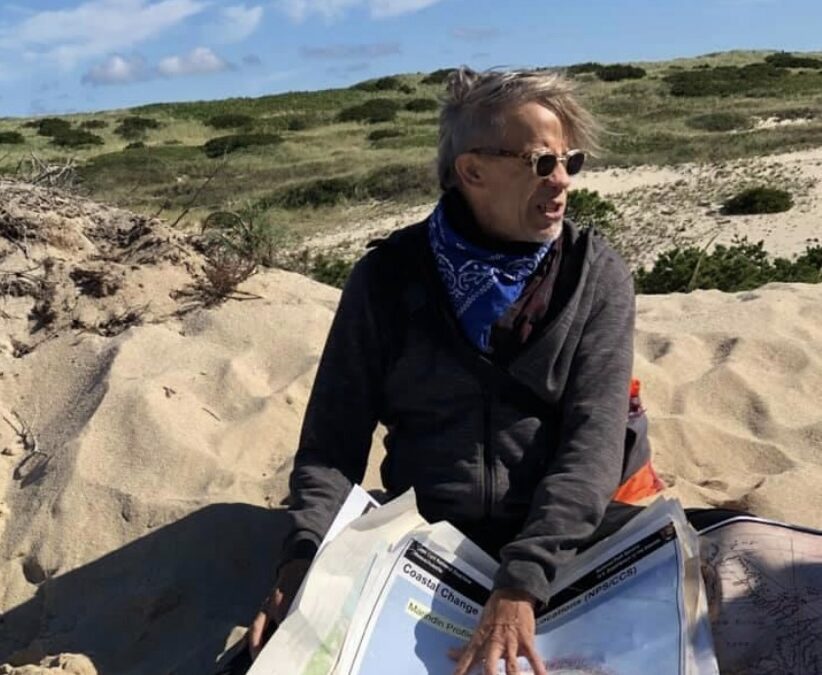
Photo: Mark Adams at the Cape Cod National Seashore.