
During aerial surveys on December 5th and 6th, scientists from the Center for Coastal Studies (CCS) Right Whale Ecology Program observed ten endangered North Atlantic right whales in Cape Cod Bay. These were the first such sightings of the 2025-2026 field season in the bay.
All of the sightings took place in the southeast area of the bay, approximately seven miles north of Dennis, MA. Most of the individuals observed are whales that frequently visit Cape Cod Bay, with seven of the ten also documented in the bay by CCS last season.
“Six of these individuals were engaged in a Surface Active Group (SAG), a social behavior wherein two or more individuals physically interact at the surface and which can include mating behaviors. In this instance, there was a 16-year-old focal female, identified as #3903 “Taffy,” accompanied by five males: including #3714 “Sawtooth,” #1150 “Gemini,” #3401 “Tux,” #4102 and #4990,” said Ryan Schosberg, Aerial Observer and Data/Photo Manager for the CCS Right Whale Ecology Program.
Seasonal protections for North Atlantic right whales are not yet in place in the bay, so boaters should be aware that whales are present in the area and exercise caution. Based on the Center’s documentation, NOAA has recommended establishing a Dynamic Management Area (DMA). DMAs are voluntary zones used to alert vessel operators to slow down to reduce the risk of collisions with right whales.
State regulations prohibiting the setting of fixed fishing gear and limiting the speed of vessels to 10 knots go into effect early next year, when larger numbers of right whales arrive in Cape Cod Bay. Ship strikes and entanglement in fishing gear are the leading causes of right whale injury and mortality.
North Atlantic right whales are critically endangered, with a total population estimated at just 384 animals, including only about 70 breeding females. They typically arrive in Cape Cod Bay in early winter, with many remaining through mid-May. Last year, nearly half the North Atlantic right whale population was observed in Cape Cod Bay, whose protected waters provide an important feeding habitat for these animals.
“The Center for Coastal Studies has conducted aerial surveys of Cape Cod Bay and adjacent waters since 1998, in collaboration with the Massachusetts Division of Marine Fisheries. Now in its 27th consecutive season, this long-term monitoring program tracks the presence, distribution, and behavior of North Atlantic right whales and provides critical data to inform conservation measures such as dynamic management zones and seasonal vessel speed restrictions,” explained Dr. Daniel Palacios, Director of the Center’s Right Whale Ecology Program.
Photo at top: EgNo 3903 Taffy, EgNo 3401 Tux, EgNo 1150 Gemini, and EgNo 4102
Photo by Center for Coastal Studies under NOAA Permit 25740-03
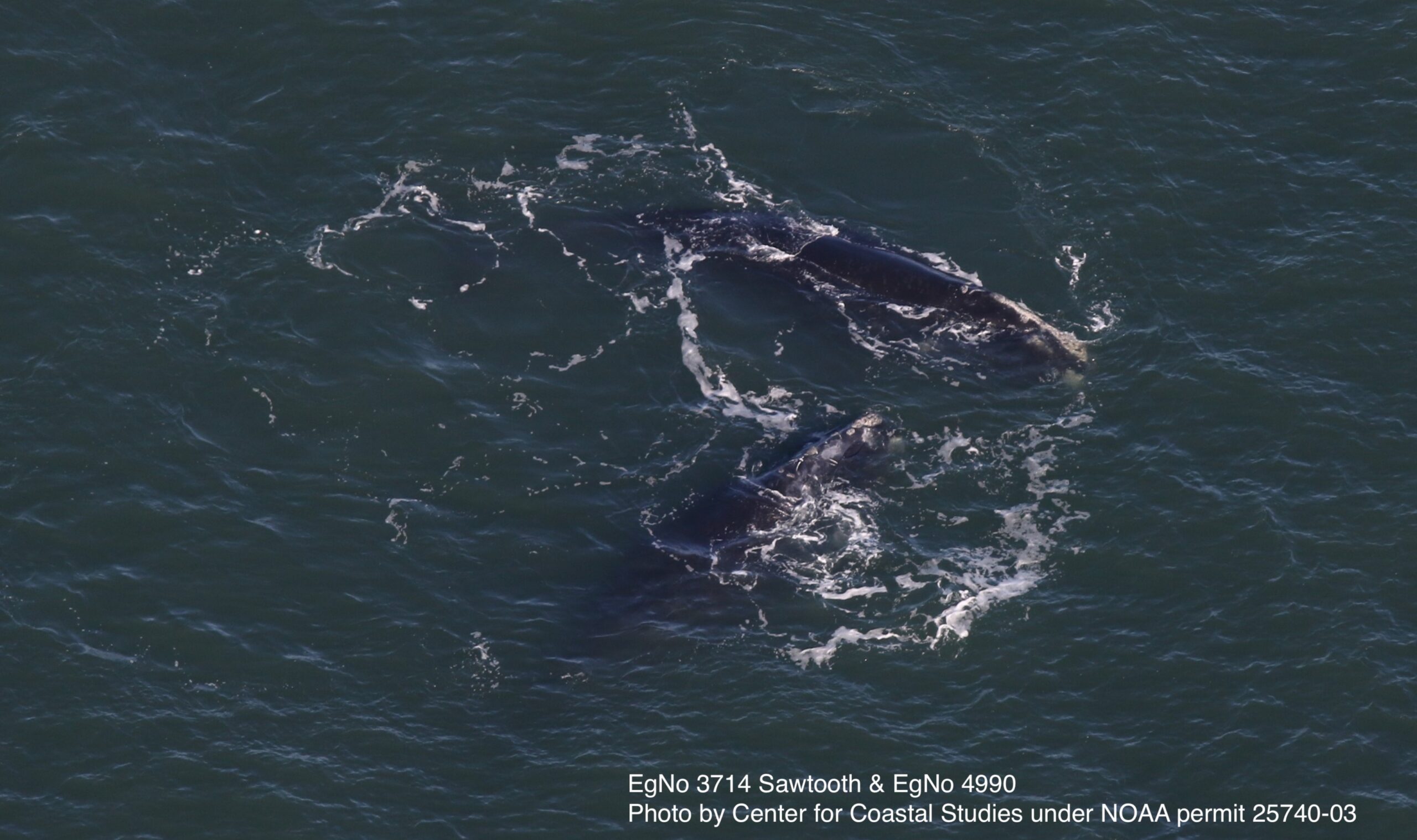 EgNo 3714 Sawtooth and EgNo 4990
Photo by Center for Coastal Studies under NOAA Permit 25740-03
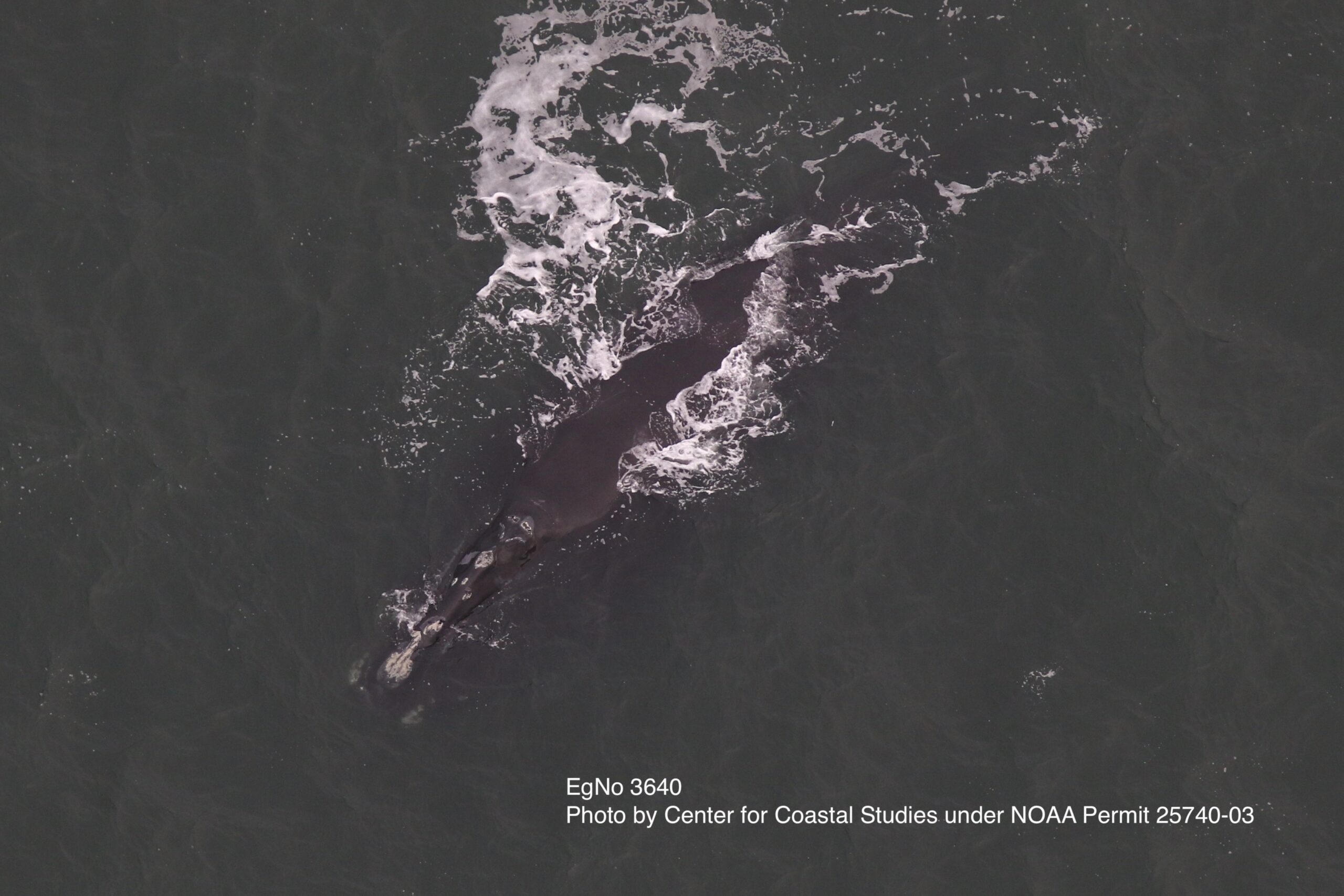 EgNo 3640
Photo by Center for Coastal Studies under NOAA Permit 25740-03
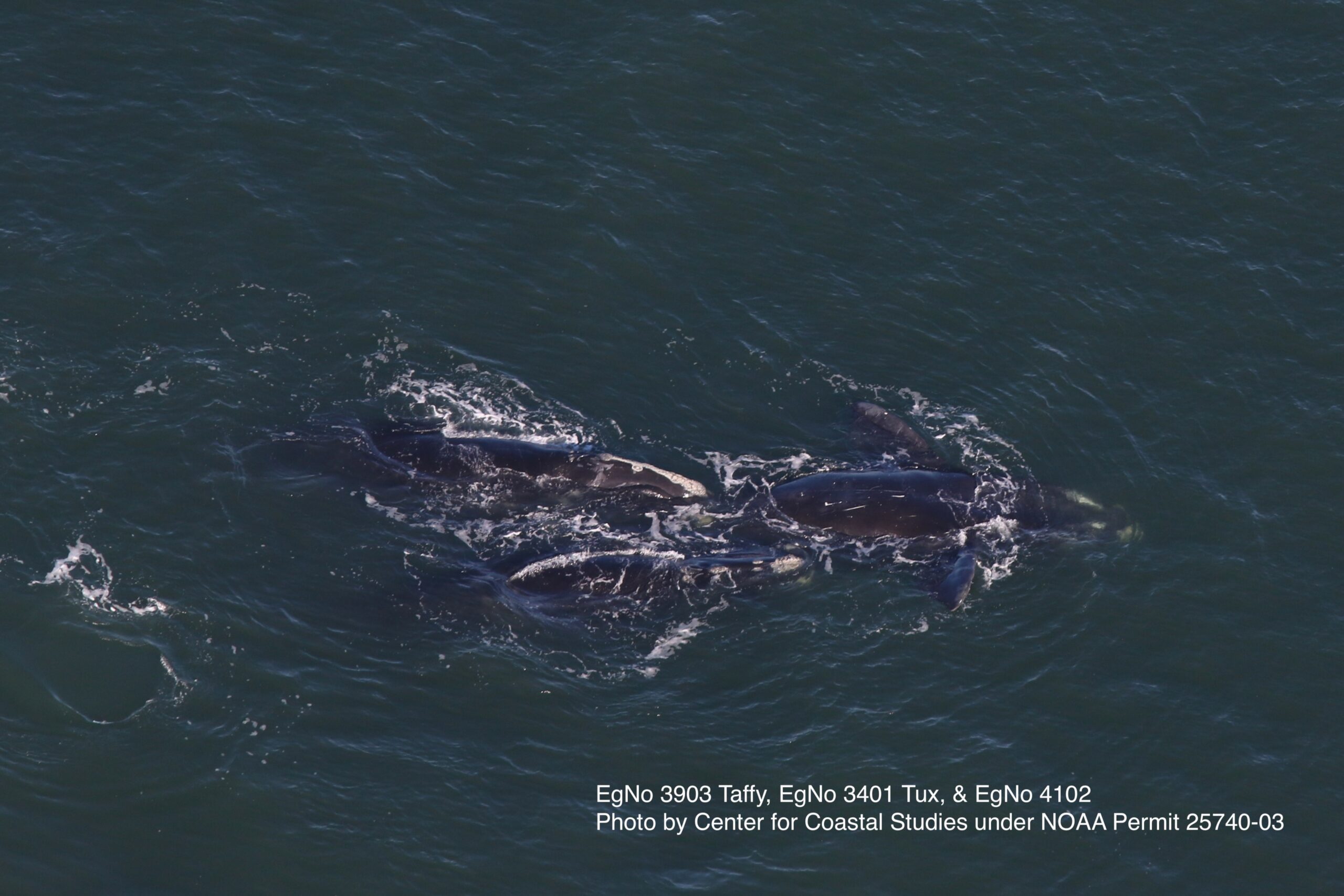 EgNo 3903 Taffy, EgNo 3401 Tux, and EgNo 4102
Photo by Center for Coastal Studies under NOAA Permit 25740-03
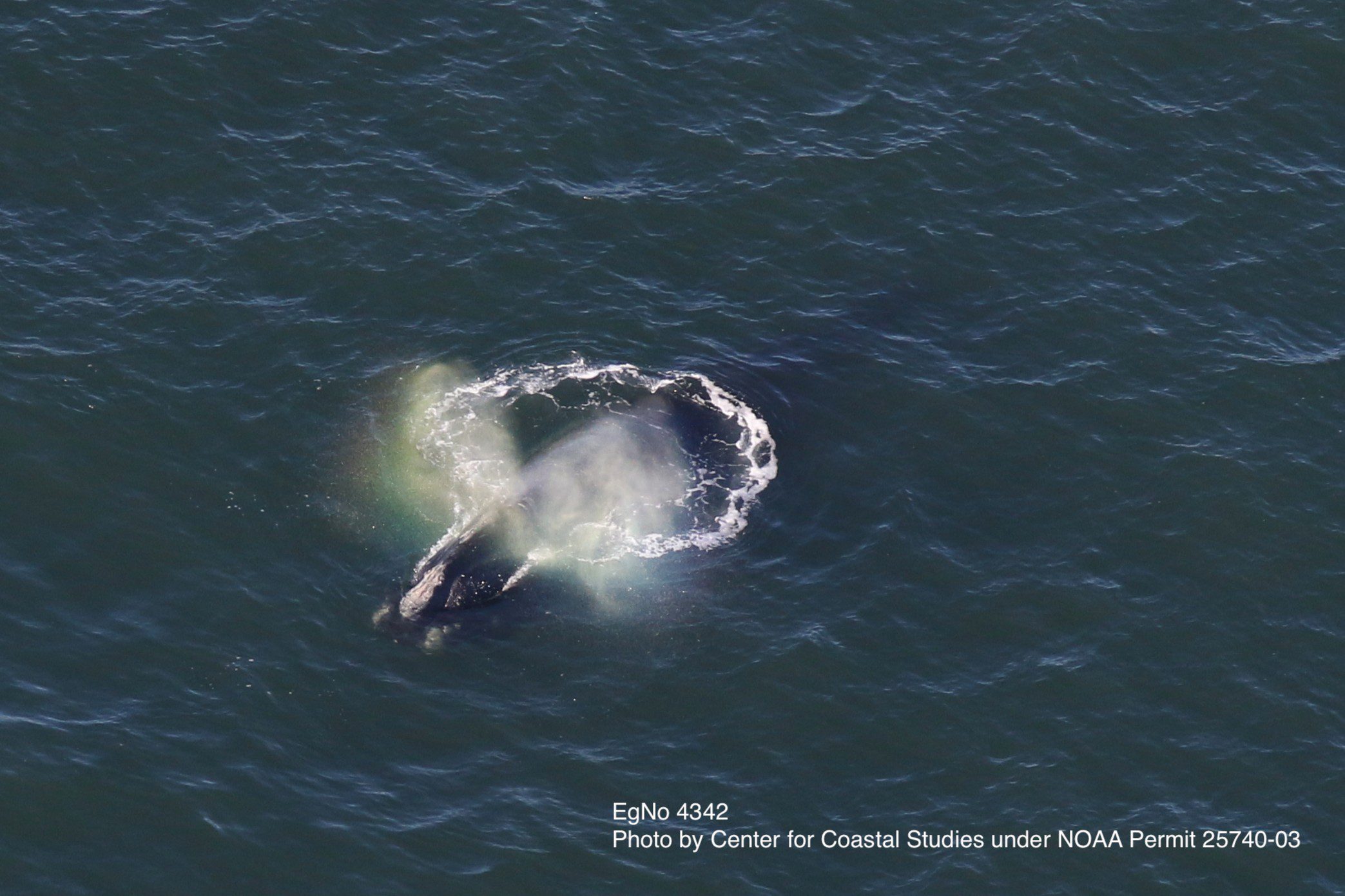 EgNo 4342
Photo by Center for Coastal Studies under NOAA Permit 25740-03