March 1st is World Seagrass Day, but in an office of the geology department at the Center for Coastal Studies (CCS) in Provincetown, it might be argued that every day is World Seagrass Day.
Called the “forgotten ecosystem,” seagrass is a vital natural resource that supports biodiversity, cycles and stores nutrients and pollution, protects coastal areas, and provides nurseries for larger fisheries. It also mitigates climate change through highly effective carbon sequestration.
Last year, a large archive of seagrass samples, collected from around the world over the past 30 years, was transferred from the University of New Hampshire’s College of Life Sciences and Agriculture to the Center for Coastal Studies. It’s the biggest collection of seagrass samples in the world.
Over the past months, CCS volunteers have been busy cataloguing those samples. That job is now about three-quarters completed, with more than 11,000 samples processed. The samples are packaged and stored according to the modern archiving protocols.
Information about the seagrass samples, including the species and location where they were collected, is entered into a searchable database. The database consists of more than 100,000 on-the-ground observations made at 122 sites in 33 countries.
It’s all part of a program called SeagrassNet, which is led by Center for Coastal Studies marine ecologist Agnes Mittermayr, Ph.D.. SeagrassNet is a global ecological program that monitors the health of seagrass ecosystems and the threats they face. Since its founding in 2001, SeagrassNet has worked with research partners and volunteers around the globe to collect seagrass samples according to a strict monitoring protocol.
Mittermayr, who wrote her doctoral dissertation on seagrass, is a leading expert on the subject. Last year, she was chosen to join a team of about three dozen seagrass experts for the UN’s 2030 Seagrass Breakthrough. A Breakthrough is a roadmap with which stakeholders work together to achieve their goals. Those goals include conserving 150,000 square kilometers of seagrass by 2030, and mobilizing $1.2 billion in funding. Specifically, the Breakthrough seeks to halt the global loss of seagrass, recover degraded seagrass beds, double protection, and ensure sustainable long-term financing. Mittermayr will also be responsible for the North America portion of the seagrass chapter in the UN’s upcoming World Ocean Assessment.
Thanks to the efforts of Mittermayr and her volunteers, much of seagrass archive’s data is now available online and accessible to everyone via a website, seagrassnet.org. Having that data accessible to researchers everywhere helps facilitate global seagrass research. The next step will be to create a way for scientists and collaborators around the world to upload data to the website.
The database couldn’t come soon enough. New advanced technology is opening new avenues of research. Through the use of genetic analysis, researchers can observe genetic shifts over time caused by climate change. Understanding how seagrass has changed over time will help guide restoration efforts.
“In order to restore anything you need to know what it used to look like,” said Mittermayr.
“Back when this study started, genetic analysis wasn’t really a thing. So there’s a whole new sluice of genetic methodology that people have access to. These samples are perfect for that because we know when and where they were collected,” explained Mittermayr.
Mittermayr noted that the archive is a valuable store of biological data with uses we can only imagine.
For example, using stable isotope analysis, Mittermayr was able to look back in time to see how the introduction of improved wastewater plants in Great Bay, New Hampshire reduced nitrogen levels and resulted in healthier seagrass beds.
“Who knows what these specimens can be used for in the future,” she mused.
Camera
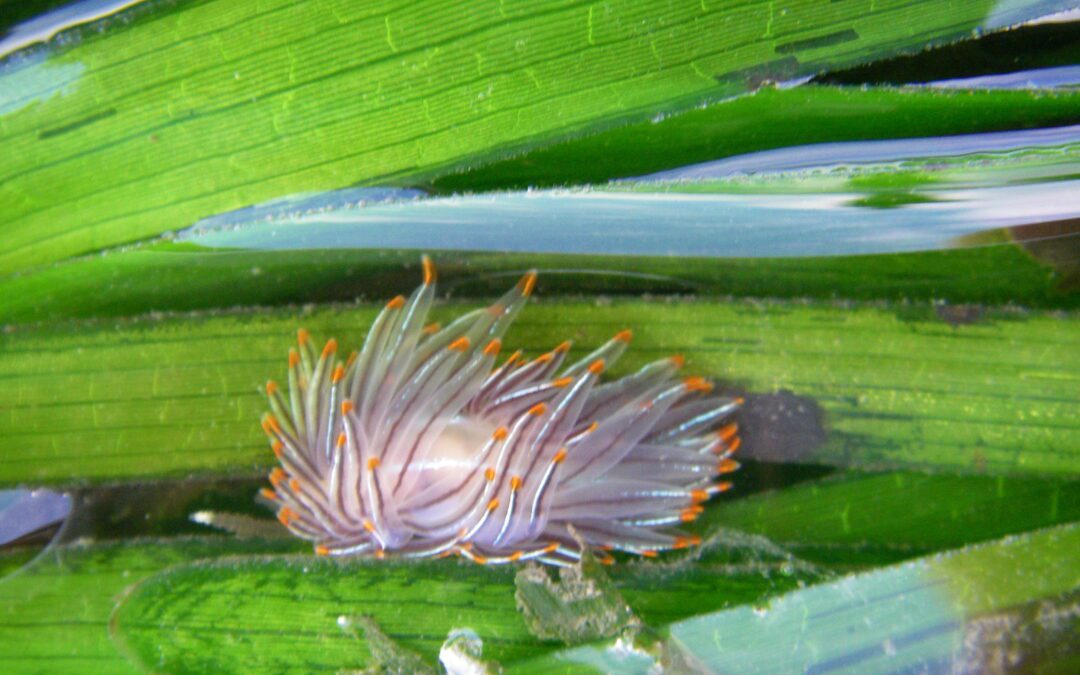
Photos, top: Nudibranch on an eelgrass (Zostera marina) blade in Humboldt Bay, CA
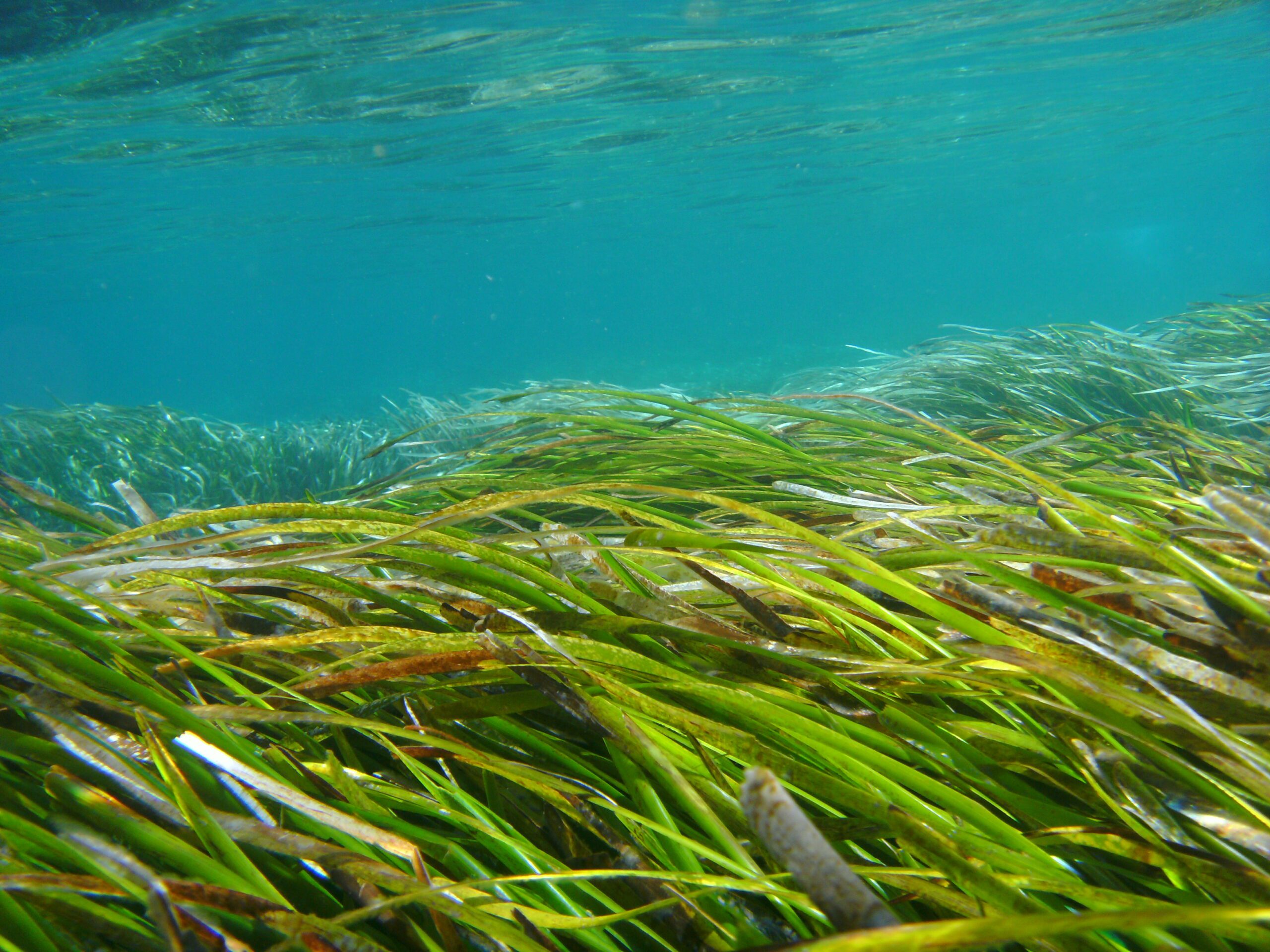
Bottom: Seagrass meadow (Posidonia oceanica) in the Mediterranean, Croatia